

Throughout human history, technological developments have transformed the ways we live, work, communicate, and create. This November, the Daily Classical Music Post will explore compositions inspired by or made possible through many of these innovations and inventions, discovering how the changing world has shaped the music we make and hear.
Pauline Oliveros: Bye bye butterfly (1967)
In 1965, the American composer Pauline Oliveros (1932–2016) was working at the San Francisco Tape Music Center, one of the most important centres of experimental electronic music in the United States. Founded in the early 1960s, it attracted composers interested in exploring the possibilities of magnetic tape, electronic oscillators, and other equipment originally designed for scientific and technical purposes. Oliveros was among its most inventive members, developing her own techniques for producing and manipulating sound. Her Bye Bye Butterfly, created that year, became one of the landmark works of early American electronic music.
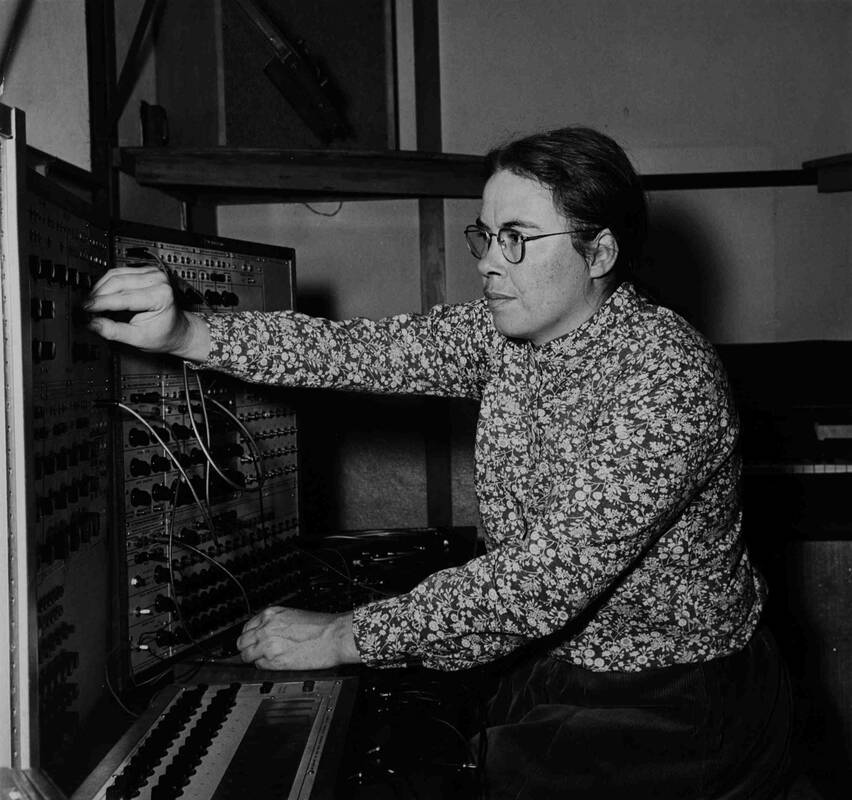
The circumstances of its creation are fascinating. Oliveros had assembled an arrangement of two Hewlett-Packard oscillators, amplifiers, a turntable, and two tape recorders connected to produce delays and echoes. By carefully adjusting the oscillators, she could create strange, shifting electronic tones, while the tape machines allowed sounds to overlap and accumulate. One evening, she decided to introduce a recording into the mix. She picked up an LP lying in the studio, placed it on the turntable, and discovered that it contained an excerpt from Giacomo Puccini’s Madama Butterfly. Without having planned it, she began incorporating the operatic recording into her electronic improvisation.
While Oliveros was upstairs creating Bye Bye Butterfly, the electronic instrument designer Don Buchla was downstairs demonstrating an early version of his revolutionary modular synthesizer. The San Francisco Tape Music Center was closely involved in the development of Buchla’s instruments, which would help transform electronic music during the following decades. Yet Oliveros was creating her own distinctive sound world using relatively simple equipment, much of it designed for purposes other than musical performance. She later recalled the coincidence with considerable amusement.
The resulting composition begins with sustained electronic tones that gradually shift, overlap, and produce unexpected combinations of frequencies. Oliveros was particularly interested in difference tones, the additional pitches that can emerge when two frequencies interact. As the music develops, the recording of Puccini’s opera appears through the electronic textures, its familiar 19th-century vocal style transformed by echoes and unfamiliar sounds. The original melody becomes increasingly difficult to separate from the surrounding electronics, creating an extraordinary encounter between two very different musical worlds.
The title has a significance beyond the accidental discovery of the record. Oliveros later described Bye Bye Butterfly as a farewell not only to 19th-century music but also to the social conventions of that period, particularly the institutionalised oppression of women. Puccini’s opera tells the tragic story of Cio-Cio-San, a young Japanese woman abandoned by her American husband. By placing this music within an entirely new electronic environment, Oliveros created a work that could be heard as both a musical transformation and a challenge to the values represented by the opera’s story. The piece also reflects the wider cultural changes of the 1960s, when artists were questioning established traditions and experimenting with new forms of expression.
Oliveros would go on to develop her influential philosophy of Deep Listening, encouraging a heightened awareness of sound and the act of listening itself. But already in Bye Bye Butterfly, we can hear the beginnings of that approach: an invitation to listen closely to sounds that might otherwise seem strange, accidental, or unmusical. And it provides another fascinating example of how technology enabled composers to rethink not only how music was produced but also what music could be.
My classical music post for today is Pauline Oliveros: Bye Bye Butterfly.


Leave a Reply