

Throughout human history, technological developments have transformed the ways we live, work, communicate, and create. This November, the Daily Classical Music Post will explore compositions inspired by or made possible through many of these innovations and inventions, discovering how the changing world has shaped the music we make and hear.
Florence Price: Mississippi River Suite (1934)
The American composer Florence Price (1887–1953) was born in Little Rock, Arkansas, and became one of the most important figures in the development of African American classical music. In 1927, she moved with her family to Chicago, joining the thousands of Black Americans leaving the South during the Great Migration. The move was prompted in part by increasing racial violence and discrimination in Arkansas, but Chicago also offered opportunities for musicians and artists that were largely unavailable to them elsewhere. Price became involved in the city’s flourishing Black cultural community, and in 1933 she made history when the Chicago Symphony Orchestra performed her First Symphony, making her the first Black woman to have a symphonic work performed by a major American orchestra.
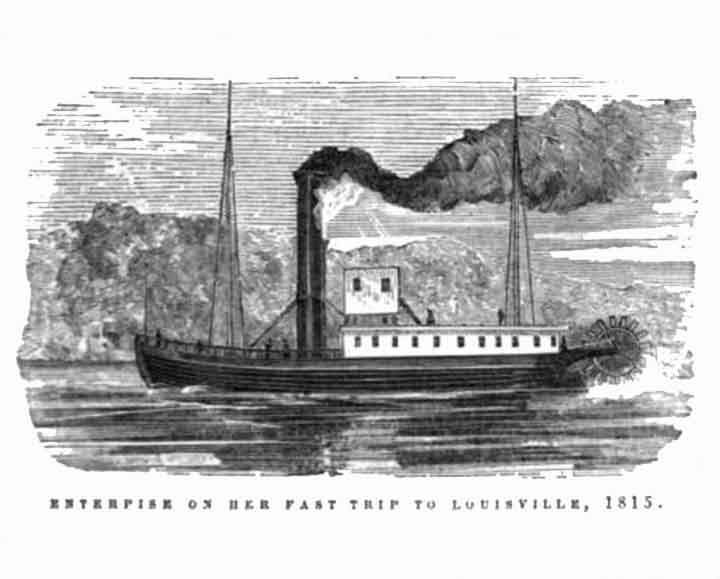
The following year, Price composed her Mississippi River Suite, a magnificent orchestral work that takes us on an imaginary journey along one of the most important waterways in North America. The Mississippi had been central to the continent’s history for centuries, serving as a transportation route for Indigenous peoples long before European settlement. During the 19th century, the development of steam-powered riverboats transformed it into a major commercial artery, carrying passengers, agricultural products, and manufactured goods between the American interior and the Gulf of Mexico. But the river was also deeply connected with the history of slavery, the movement of enslaved people, and the development of African American musical traditions.
Price’s composition, sometimes subtitled The River and the Songs of Those Dwelling upon Its Banks, imagines a boat travelling along the Mississippi and encountering the landscapes and musical cultures of the communities living beside it. Although called a suite, the work unfolds in one continuous movement, lasting approximately half an hour. It begins with an atmospheric depiction of dawn, as the river gradually comes to life. The music then moves through contrasting episodes, including a passage intended to evoke Indigenous American music, before introducing a succession of familiar melodies associated with life along the river.
Among these are the African American spirituals “Nobody Knows the Trouble I’ve Seen,” “Stand Still, Jordan,” “Go Down Moses,” and “Deep River,” together with popular songs including “Steamboat Bill.” Price weaves these melodies into an elaborate orchestral tapestry, sometimes allowing them to emerge individually and sometimes combining them in increasingly complex textures. Towards the end, “Deep River” becomes especially prominent, bringing a sense of emotional weight and historical memory to the music. Price’s orchestration is wonderfully imaginative, drawing on the European symphonic tradition while giving a central place to musical material rooted in African American experience.
In 1934, the United States was still struggling through the Great Depression, racial segregation remained entrenched, and the Great Migration was reshaping the cultural life of northern cities. Chicago, where Price was living, had become a major centre for blues, jazz, gospel, literature, and the visual arts of the Black Chicago Renaissance. Her Mississippi River Suite belongs to that larger cultural movement, presenting African American musical traditions within a substantial orchestral composition at a time when Black composers, particularly women, faced enormous obstacles to recognition.
And the steam-powered riverboat helped transform the Mississippi into a route of commerce, migration, and cultural exchange. Price’s imaginary journey reminds us that the history of transportation is also the history of the people whose lives were changed by it, and of the music they carried with them.
My classical music post for today is Florence Price: Mississippi River Suite.


Leave a Reply