

Throughout human history, technological developments have transformed the ways we live, work, communicate, and create. This November, the Daily Classical Music Post will explore compositions inspired by or made possible through many of these innovations and inventions, discovering how the changing world has shaped the music we make and hear.
Villa-Lobos ‘Little Train of the Caipira’ – Sir Eugene Goossens conducts the LSO
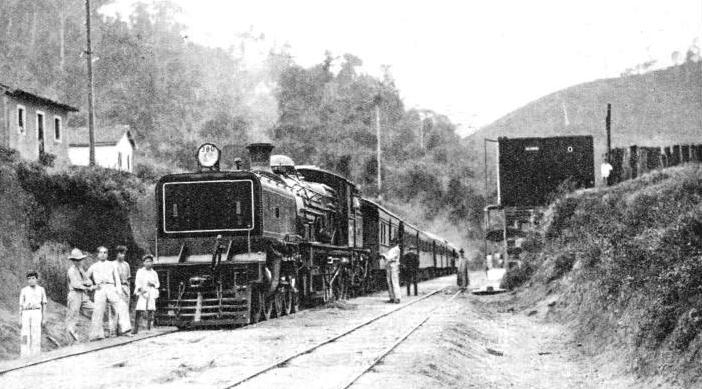
The arrival of the steam locomotive in the 19th century transformed the way people and goods moved around the world. In Brazil, the first railway opened in 1854, connecting Porto Mauá with Fragoso, near Rio de Janeiro. As the network expanded, trains became essential for transporting coffee and other agricultural products from the interior to the ports, while also connecting communities that had previously depended on horses, carts, and river transport. Building railways through Brazil’s mountains and forests presented enormous engineering challenges, requiring bridges, tunnels, and viaducts that were themselves remarkable achievements of technology.
The Brazilian composer Heitor Villa-Lobos (1887–1959) was described in The New Grove Dictionary of Music and Musicians as “the single most significant creative figure in 20th-century Brazilian art music.” He composed more than 2,000 works, incorporating both Brazilian folk music and European classical traditions into his compositions. Villa-Lobos travelled extensively through Brazil, collecting and studying traditional music, and some of his journeys took him into the countryside by train. These experiences helped shape his distinctive musical language, in which the sounds and rhythms of Brazilian life often find their way into the concert hall.
In 1930, Villa-Lobos composed Bachianas brasileiras No. 2, the second in a series of nine works inspired by both the music of Johann Sebastian Bach and the musical traditions of Brazil. Its final movement, a toccata entitled “O trenzinho do caipira” (The Little Train of the Caipira), evokes a journey aboard a small steam locomotive carrying rural passengers through the Brazilian countryside. The word caipira refers to someone from rural Brazil, particularly the interior of São Paulo and neighbouring regions. Villa-Lobos also prepared a version for cello and piano, which he performed himself at its premiere in 1930.
The music begins with the sounds of a locomotive slowly coming to life. The orchestra imitates the hiss of steam, the clanking of machinery, and the gradual movement of wheels along the tracks. As the train gathers speed, a wonderfully lyrical melody emerges above the rhythmic accompaniment, suggesting the countryside passing by outside the windows. Villa-Lobos uses an imaginative combination of orchestral instruments, including Brazilian percussion, to recreate the sounds of the engine without using any actual machinery. Eventually the music slows, the rhythmic patterns become less insistent, and the little train seems to pull into its destination, releasing the last of its steam.
There is something particularly appealing about the way Villa-Lobos transforms the mechanical sounds of a steam locomotive into music. Unlike Honegger’s Pacific 231, which explored the mathematical possibilities of acceleration, Villa-Lobos gives us something closer to a musical journey, complete with the sights, sounds, and sensations of travelling through the Brazilian countryside. Both composers were fascinated by the locomotive, but their musical responses to the same technology could hardly be more different.
My classical music post for today is Heitor Villa-Lobos: Bachianas brasileiras No. 2, “O trenzinho do caipira.”


Leave a Reply