

Throughout human history, technological developments have transformed the ways we live, work, communicate, and create. This November, the Daily Classical Music Post will explore compositions inspired by or made possible through many of these innovations and inventions, discovering how the changing world has shaped the music we make and hear.
Siegfried – Act 1, Scene 3 (“Hoho! Hohei! Schmiede, mein Hammer…Den der Bruder schuf”)
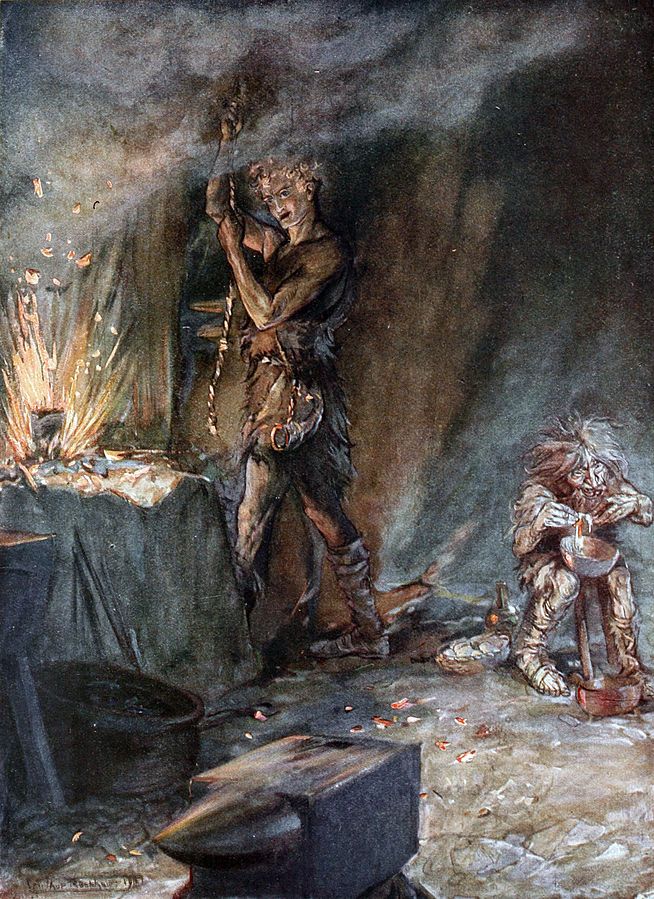
The German composer Richard Wagner (1813–1883) spent more than 25 years creating Der Ring des Nibelungen (The Ring of the Nibelung), his monumental cycle of four operas inspired by Germanic and Norse mythology. At the heart of the story are gods, giants, dwarves, heroes, and a magical ring that grants its owner immense power. The third opera, Siegfried, was completed in 1871 and first performed at the Bayreuth Festival in 1876. One of its most memorable scenes takes place in a blacksmith’s forge, where the young hero attempts to remake his father’s shattered sword.
The ability to extract metals from ores and shape them into tools and weapons was one of humanity’s most important technological developments. Copper and bronze transformed early societies, while the widespread use of iron brought stronger and more widely available tools for agriculture, construction, and warfare. Blacksmiths became indispensable craftspeople, using furnaces, bellows, hammers, and anvils to heat and shape metal. Their skills also acquired an almost magical significance in mythology, where extraordinary weapons were frequently forged by gods or supernatural craftsmen.
In the first act of Siegfried, the dwarf Mime has been trying unsuccessfully to repair Nothung, the magical sword that once belonged to Siegfried’s father, Siegmund. The sword was shattered by the god Wotan in the preceding opera, Die Walküre, and only someone who has never known fear can forge it anew. Siegfried, who has grown up in Mime’s care, decides to do the job himself. He files the broken blade into fragments, melts the metal in a crucible, pours it into a mould, and then hammers the new sword into shape. Meanwhile, Mime secretly prepares a poisoned drink, intending to kill Siegfried after he has defeated the dragon Fafner and recovered the ring.
Wagner brings the forge vividly to life through the orchestra. The rhythmic hammering becomes part of the music, while the brass instruments proclaim the heroic themes associated with Siegfried and his sword. As Siegfried works, he sings his exuberant forging song, calling upon Nothung to emerge stronger than before. The music builds towards a triumphant conclusion when Siegfried tests his newly forged weapon by striking the anvil and splitting it in two.
Wagner himself had an unexpected source of inspiration for some of this music. While working on the first act in Zürich in 1856, he was tormented by the constant hammering of a metalworker who had set up shop across the street. According to his autobiography, he became so exasperated that he nearly stopped working on the opera. Instead, his irritation inspired music for Siegfried’s angry confrontation with Mime. Wagner played the passage for his sister, and the two of them burst out laughing. Sometimes even the most unwelcome noise can become useful musical material!
Today’s performance features the German tenor Siegfried Jerusalem, one of the outstanding Wagnerian singers of his generation, whose portrayal of Siegfried combines the vocal strength required by the role with a wonderful sense of youthful energy. He also happens to be my favourite Siegfried!
My classical music post for today is Richard Wagner: Siegfried, Act I, the forging of Nothung.


Leave a Reply