

Throughout human history, technological developments have transformed the ways we live, work, communicate, and create. This November, the Daily Classical Music Post will explore compositions inspired by or made possible through many of these innovations and inventions, discovering how the changing world has shaped the music we make and hear.
Haydn – FUGUE FOR MECHANICAL CLOCK IN C MAJOR – HOB XIX:16
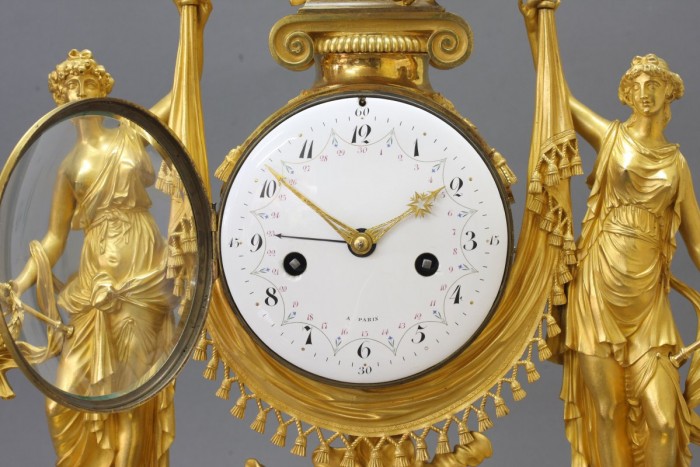
The Austrian composer Joseph Haydn (1732–1809) spent much of his career in the service of the wealthy Esterházy family. Prince Nikolaus Esterházy was an enthusiastic collector, particularly of clocks, and his collection reportedly numbered around 400. Among the remarkable people employed at his court was Primitivus Niemecz, a priest, librarian, accomplished musician, and extraordinarily inventive clockmaker. Niemecz was especially interested in building mechanical musical instruments, and his friendship with Haydn led to an unusual collaboration.
During the 18th century, clockmakers were developing increasingly elaborate automata: mechanical devices capable of performing actions without direct human intervention. Some could write, draw, or imitate human movements, while others could play musical instruments. One particularly ingenious invention was the Flötenuhr, or flute clock, which combined a clockwork mechanism with a miniature pipe organ. Inside the instrument, a rotating cylinder fitted with carefully positioned pins operated the organ’s mechanism, allowing it to play a predetermined sequence of notes.
Niemecz constructed several of these instruments, and Haydn composed and arranged music specifically for them, particularly during the late 1780s and early 1790s. The surviving collection, catalogued as Hob. XIX, contains 32 short pieces. The instruments had a limited range and their mechanisms could accommodate only relatively short pieces, so Haydn had to work within quite specific technical restrictions. Nevertheless, he managed to create music full of charm, wit, and inventiveness.
Several of these fascinating instruments have survived in museum collections in Vienna and Utrecht. Their mechanisms provide valuable evidence about 18th-century musical performance. This is an early example of a machine performing music automatically, long before the invention of recorded sound, the player piano, or the computer.
Haydn’s collaboration with Niemecz also raises an interesting question that remains relevant today: if a machine performs music without a human musician, where does the creativity lie? In this case, the answer seems clear enough. Haydn supplied the musical imagination, Niemecz supplied the mechanical ingenuity, and together they created something neither could have achieved in quite the same way alone.
My classical music post for today is Joseph Haydn: Pieces for Mechanical Clock, Hob. XIX, No. 16.


Leave a Reply