

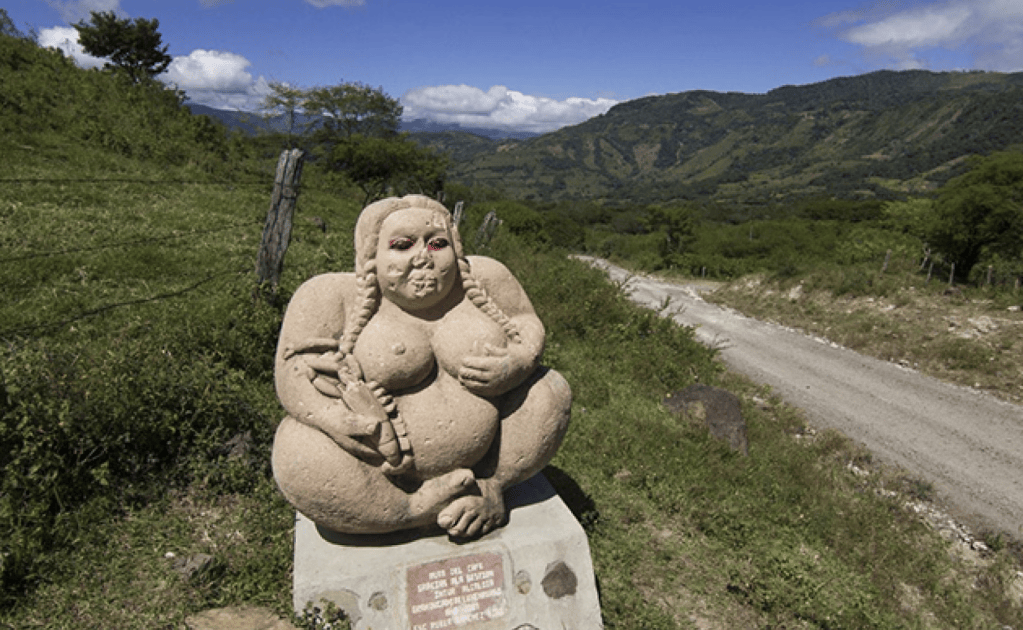
For millennia, the rhythms of planting and harvest have shaped human life, marking seasons of labour, renewal, abundance, and gratitude. This October, the Daily Classical Music Post will journey across eras and continents, celebrating harvest in the Northern Hemisphere and planting in the Southern through music inspired by the Earth and its changing seasons.
Sinfonía La Pachamama – Jorge Pinzón
The Colombian composer Jorge Pinzón (born 1968) began studying music in Tunja before receiving a scholarship to continue his education at the Tchaikovsky Conservatory in Moscow, where he studied oboe and composition from 1988 to 1994. He later devoted himself primarily to composition and teaching and served as head of composition at the Juan N. Corpas University in Bogotá.
Pinzón composed his Sinfonía La Pachamama in 2015 as a tribute to Pachamama, the Mother Earth deity of the Indigenous peoples of the Andes. The symphony has four movements: Pachamama, Inti, Tayrona, and Pachacamac. Their titles broaden the work’s geographical and cultural horizons: Inti is the Inca sun deity; Tayrona refers to the Indigenous civilization of northern Colombia; and Pachacamac was an important deity as well as a sacred centre on the coast of present-day Peru.
The opening movement, Pachamama, immediately establishes the work’s large scale. Pinzón uses the full resources of the modern symphony orchestra, with percussion playing a particularly important role. Strong rhythmic patterns are heard beneath sustained and repeated orchestral figures, while short ideas pass between different instrumental groups. Rather than unfolding as a long Romantic-style melody, much of the music develops through layers of rhythm, changing orchestral colour, and repeated motifs. Quiet atmospheric passages suddenly give way to dense orchestral climaxes, creating a sense of something elemental and powerful gradually gathering force.
That makes this a very different treatment of Pachamama from the Alonso-Crespo work we heard earlier this month. Alonso-Crespo used unaccompanied human voices and an ecological poem; Pinzón created an expansive orchestral landscape in which rhythm, sonority, and sheer physical weight become part of the expression.
Planting and harvesting are human activities. However, before either can be accomplished, the Earth, sunlight, water, and the changing seasons have to create the conditions that make this all possible. In Sinfonía La Pachamama, we are reminded how powerful those natural forces are, and how weak humans are in comparison.
My classical music post for today is Jorge Pinzón: Sinfonía La Pachamama.


Leave a Reply