

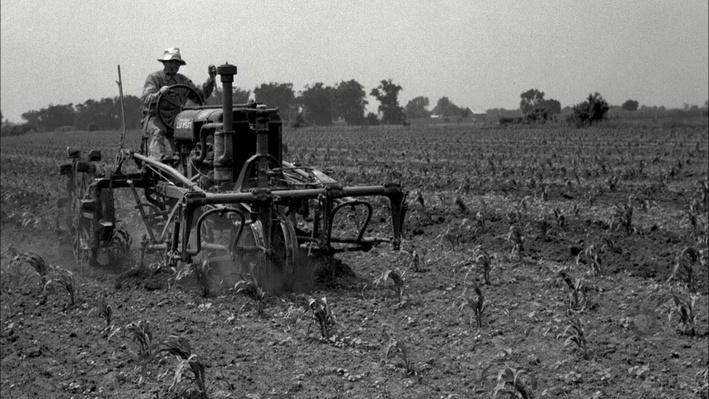
For millennia, the rhythms of planting and harvest have shaped human life, marking seasons of labour, renewal, abundance, and gratitude. This October, the Daily Classical Music Post will journey across eras and continents, celebrating harvest in the Northern Hemisphere and planting in the Southern through music inspired by the Earth and its changing seasons.
The Promise of Living from The Tender Land
Aaron Copland (1900–1990) was one of the most influential American composers of the 20th century. In works such as Appalachian Spring, Billy the Kid, and Rodeo, he developed the spacious, open musical style that became strongly associated with the American landscape. The Tender Land, composed in 1952–1954, was his only full-length opera. The libretto was written by Horace Everett, the pseudonym of Copland’s friend and partner Erik Johns, and the opera was partly inspired by James Agee and Walker Evans’s Let Us Now Praise Famous Men, a famous portrait of American farm families during the Great Depression. The opera was premiered by the New York City Opera on 1 April 1954.
Set on a Midwestern farm during the 1930s, the opera centres on Laurie Moss, a young woman approaching high-school graduation and beginning to imagine a life beyond her family’s farm. “The Promise of Living” comes at the end of Act I. Laurie, her parents, and her grandfather are joined by Martin, a young drifter who has arrived looking for work during the harvest, and these characters form a five-voice ensemble.
“The Promise of Living” is a celebration of harvest, work, and community. Rather than depicting the physical act of harvesting, Copland presents a family pausing at the end of the working day to reflect on what the land has provided and on the shared labour that made the harvest possible.
The music begins quietly and simply, but as the additional voices gradually enter, the texture expands. Copland builds the ensemble towards broad, luminous harmonies, creating the sense that individual voices are joining together to become a community. At the climax of the piece, Copland introduces the melody of the American hymn “Zion’s Walls.” The result has something of the character of a hymn without actually becoming one: expansive, dignified, and communal. The words celebrate “the promise of living with hope and thanksgiving” and the satisfaction of working together to bring in the harvest. There is gratitude for the land, but also there is recognition that its abundance depends upon human labour.
In “The Promise of Living,” Copland gives us the moment when the work is nearly done. People can look at what they have accomplished together and give thanks for the harvest. It is a gentler celebration than some we have heard this month!
My classical music post for today is Aaron Copland: The Tender Land: “The Promise of Living.”


Leave a Reply