

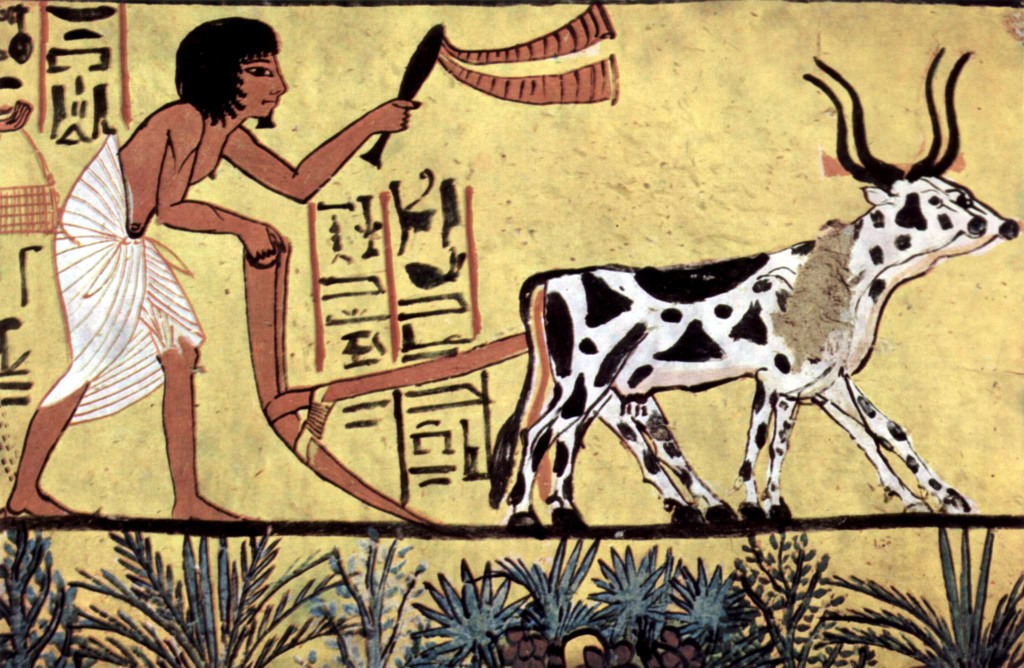
For millennia, the rhythms of planting and harvest have shaped human life, marking seasons of labour, renewal, abundance, and gratitude. This October, the Daily Classical Music Post will journey across eras and continents, celebrating harvest in the Northern Hemisphere and planting in the Southern through music inspired by the Earth and its changing seasons.
Soliman Gamil (1924–1994) was born in Alexandria and studied piano, harmony, counterpoint, and orchestration before continuing his composition studies at the École Normale de Musique in Paris. He was also a qanun player and wrote extensively about music for the Egyptian newspaper Al-Ahram. From the 1960s onwards, he became particularly interested in combining Western composition with traditional Egyptian instruments and musical practices. Gamil’s Collecting the Harvest (composed in the 1970s) is a wonderful example of how he accomplished this.
Gamil’s interests reached unusually far back. As a teenager, he assisted the musicologist Hans Hickmann, who was researching music in Ancient Egypt through surviving instruments and representations seen on temple walls. Later, Gamil travelled through Egypt recording traditional music and rituals. Rather than simply preserving folk music unchanged, he incorporated what he learned into his own compositions, working directly with traditional musicians and experimenting with instruments including the qanun, nay, mizmar, and percussion. His daughter recalled that he compared the living folk music he encountered with what he had learned about music from Egypt’s ancient past.
Collecting the Harvest appears on Gamil’s album The Egyptian Music, recorded in Cairo and released by Touch in 1987. This short piece is rhythmically driven, with percussion providing a persistent pulse beneath repeating melodic figures. Instead of developing a long melody in the Western classical manner, Gamil builds the music through repetition, changes of instrumental colour, and overlapping rhythmic patterns. The effect is one of continuous physical activity, mimicking the repetitious movements of harvesting crops.
Egypt’s agriculture has depended upon the Nile for thousands of years. Before modern dams transformed its annual cycle, the river’s flooding replenished the agricultural land along its banks, making possible the planting and gathering of crops in an otherwise overwhelmingly arid landscape. In Collecting the Harvest, Gamil brings us to one of the world’s most ancient agricultural landscapes, where the relationships among people, river, fields, and harvest stretches back thousands of years.
My classical music post for today is Soliman Gamil: Collecting the Harvest.


Leave a Reply