

For millennia, the rhythms of planting and harvest have shaped human life, marking seasons of labour, renewal, abundance, and gratitude. This October, the Daily Classical Music Post will journey across eras and continents, celebrating harvest in the Northern Hemisphere and planting in the Southern through music inspired by the Earth and its changing seasons.
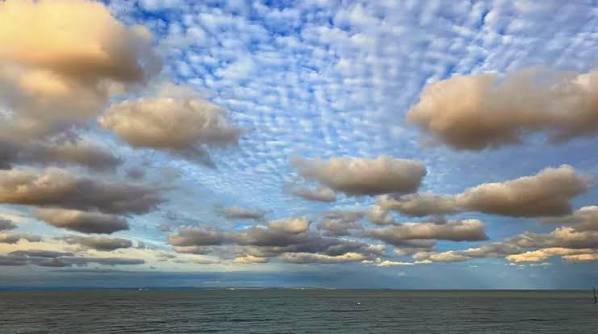
No planting can lead to a harvest without water, so today our journey turns from the crops themselves to the clouds that sustain them. Brenda Gifford (born 1968) takes us to Yuin Country on the south coast of New South Wales, Australia, in her Mungala (the Dhurga word for “clouds”), where clouds gather over the sea, build into thunder, and finally bring the welcome relief of rain.
Gifford is a contemporary classical composer as well as a classically trained saxophonist and pianist. Her career has ranged widely: she has written for orchestras and contemporary ensembles, worked in jazz and popular music, and was a member of the Indigenous reggae-rock band Mixed Relations. She has received commissions from organizations including the Sydney Symphony Orchestra, the Canberra International Music Festival and Four Winds, and in 2020 became Ensemble Offspring’s inaugural First Nations Composer in Residence.
Mungala was written in 2018 as part of a collaboration between the Sydney Conservatorium of Music’s Composing Women program and the American flutist Claire Chase. Scored for alto flute and percussion—originally with clap sticks—the work lasts about six minutes. It received its Australian premiere at the Canberra International Music Festival in 2018, and Chase subsequently performed it at National Sawdust in Brooklyn, New York, in 2019.
The inspiration is very specific. Gifford asks us to imagine standing on a clifftop at Wreck Bay, looking out across the sea and watching clouds begin to gather. In the music, those clouds seem to move and dance across the sky as the weather intensifies. Thunder arrives, but the journey does not end in violence or storm: eventually there is the release of gentle rain. The low, breathy sonority of the alto flute and the sounds of the percussion make this less a conventional musical portrait of a landscape than an experience of weather unfolding around us.
Mungala brings us to something every agricultural tradition ultimately depends upon. Above Yuin Country, we look upwards: the clouds gather over the sea, thunder rolls, and at last the rain comes. Long before the harvest can be gathered, the Earth must first have water.
My classical music post for today is Brenda Gifford: Mungala.


Leave a Reply