

For millennia, the rhythms of planting and harvest have shaped human life, marking seasons of labour, renewal, abundance, and gratitude. This October, the Daily Classical Music Post will journey across eras and continents, celebrating harvest in the Northern Hemisphere and planting in the Southern through music inspired by the Earth and its changing seasons.
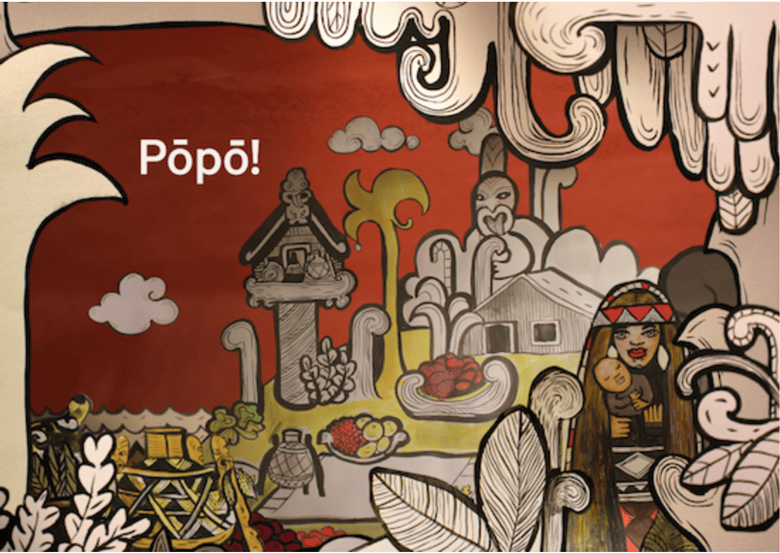
Pō! Pō! is an oriori, a traditional Māori song composed for a child, attributed to Ēnoka Te Pakaru, a rangatira (chief or community leader) of Te Aitanga-a-Māhaki from the Tūranga (Gisborne) region of the North Island. Te Pakaru was also known as a tohunga whakairo, or master carver, and he was among the rangatira who signed Te Tiriti o Waitangi (the Treaty of Waitangi) at Tūranga in 1840.
An oriori is sometimes described simply as a lullaby, but that doesn’t really convey its importance. These were songs for children that could preserve whakapapa (genealogy), tribal history, mythology, and knowledge of the natural world. Through them, a child could begin learning about their ancestors, their land, and their place within a much larger story. Pō! Pō! was important enough to be preserved in Ngā Mōteatea, the great collection of traditional Māori songs by Sir Āpirana Ngata begun in the 1920s, where it appears as Song 145.
Pō! Pō! begins with a hungry child crying for food. But from that small moment the song opens outwards into the history of one of the most important foods in Māori life—the kūmara, or sweet potato. Pō! Pō! recounts traditions surrounding the kūmara’s origins and its journey from the ancestral homeland of Hawaiki to Aotearoa, invoking ancestors, atua, and places associated with its arrival and cultivation.
For Māori, the story of the kūmara is more than an account of how a crop was introduced. Its cultivation became entwined with whakapapa, connecting people with ancestors, the atua, the land, and the plants that sustained them. Knowledge about planting and tending the kūmara—and the stories explaining where it came from—could therefore be preserved and passed from one generation to another. In Pō! Pō!, agricultural knowledge becomes cultural memory, sung to a child who will inherit both.
The song itself has had a remarkably long life. It was preserved through oral tradition and later through written collections and recordings; historic performances of Pō! Pō! survive in New Zealand’s national audiovisual collections. Far from being merely an old song about an old story, it belongs to a continuing tradition in which music carries knowledge across generations. And it reminds us that the history of the harvest is also a history of the people who plant, tend, gather—and remember.
My classical music post for today is Ēnoka Te Pakaru: Pō! Pō!


Leave a Reply