

Throughout history, myths and legends have brought ancient mysteries and epic sagas to life. This September, the Daily Classical Music Post will explore how composers from different eras and continents have reimagined these stories through the universal language of music.
GILLIAN WHITEHEAD: Hineraukatauri
In almost every ancient culture, music and dance were personified. Sometimes there was one deity for music and another for dance, but often there was one deity for both. Certain instruments have been associated with deities of music and dance in the world’s mythologies, including flutes, string instruments, and percussion instruments. Some of these instruments are said to mimic the sound of the deities’ voices.
The New Zealand composer Gillian Whitehead (born 1941) is of Māori Ngāi Te Rangi descent, and this has been an increasingly important influence on her music. She has said in interviews that the Māori part of her heritage is a vital spiritual anchor that informs her best compositional work.
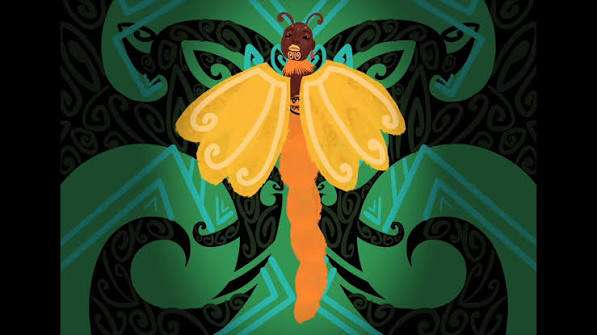
Hineraukatauri (1999) was written for flute and taonga pūoro. It is dedicated to Alexa Still and Richard Nunns, who gave the first performance in 1999. Whitehead wrote in her programme notes, “In Māori tradition, Hineraukatauri is the goddess of music and dance. She is embodied in the form of the female case-moth, who hangs in the bushes and sings in a pure, high voice to attract the male moths to her. Her hair is found as a fern, the hanging spleenwort, and her voice is heard in the sound of the pūtōrino, an instrument known only in Aotearoa. The pūtōrino is an instrument that can be played in various ways—as a flute, as a trumpet and as a means of enhancing or altering the human voice.”
Hineraukatauri is widely acknowledged to be the first composition to intentionally combine traditional Māori instruments with Western instruments. The taonga pūoro include three different pūtōrino, one made from albatross bone and the other two made out of wood. Other traditional instruments include a karanga manu (bird-caller), a pūrerehua (swung bull-roarer) and tumutumu (tapped instruments). The flutist plays piccolo, flute, and alto flute. The flute parts are all notated but the taonga pūoro parts are improvised. There are a few places in the score where the flutist is encouraged to improvise as well.
The piccolo and bone pūtōrino represent the female case-moth singing to attract her mate. The other instruments, particularly the traditional ones, create an atmosphere reminiscent of the bush environment where the case-moth is hanging. Many reviewers have seen this piece as a masterclass in treating indigenous instruments with dignity.
My classical music post for today is Gillian Whitehead: Hineraukatauri.


Leave a Reply