

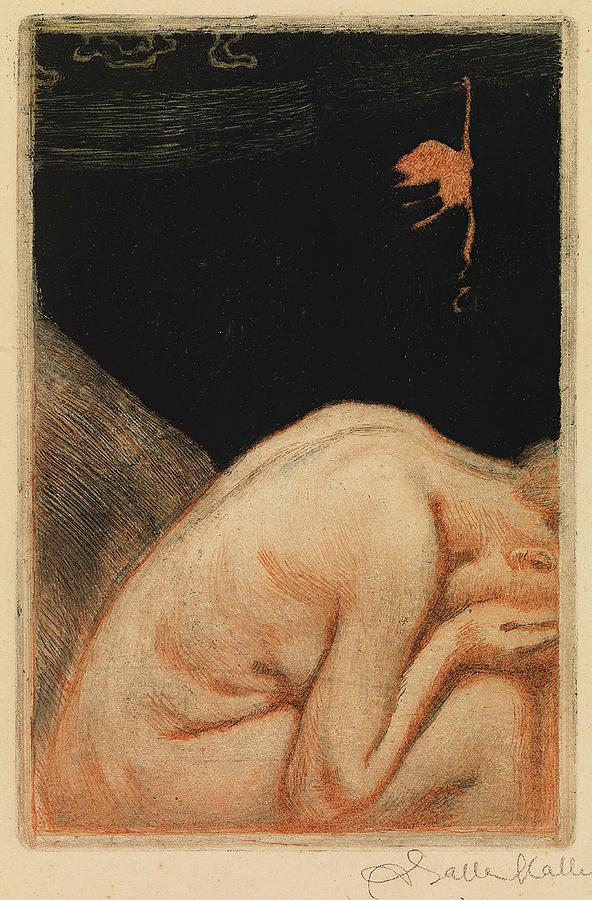
Throughout history, myths and legends have brought ancient mysteries and epic sagas to life. This September, the Daily Classical Music Post will explore how composers from different eras and continents have reimagined these stories through the universal language of music.
Sibelius: The Swan of Tuonela, Op. 22 No. 2
The national epic of Finland, the Kalevala, is a 19th-century collection of epic Finnish, Karelian, and Ingrian folklore and mythology, telling stories about the creation of the world. A central part of this mythology involves Tuonela, the dark Finnish underworld, where heroes must travel to complete hazardous trials. In one well-known story, the hero Lemminkäinen meets a tragic fate while trying to hunt the sacred Swan of Tuonela, a majestic creature that swims on the underworld’s river. Lemminkäinen is shot with a poisoned arrow and dies, but in the next part of the story he is restored to life.
The Finnish composer Jean Sibelius (1865–1957) was obsessed with the Kalevala throughout his life, and many of his works were based on stories from it. His devotion to the epic helped him to move away from German Romantic influences and create a musical language that was Finnish. He composed many works based on characters from the Kalevala, including the Swan of Tuonela.
Sibelius’s one-movement tone poem Tuonelan joutsen (The Swan of Tuonela), Op. 22/2, was written for cor anglais solo and orchestra. Sibelius worked on this from 1893 to 1895 and it is part of the Lemminkäinen Suite, a collection of four tone poems that had their inspiration in the legend. In the score to Tuonelan joutsen, Sibelius wrote, “Tuonela, the land of death, the hell of Finnish mythology, is surrounded by a large river of black waters and a rapid current, in which the swan of Tuonela glides majestically singing.” The choice of cor anglais (English horn) for the voice of the swan was a brilliant decision, as its tone brings to mind loneliness, melancholy, otherworldliness, and poignancy, perfect to describe the world that the swan inhabits and protects. Some people have said that this piece is “Swan Lake meets Parsifal,” but I think it is much more than that. It is a masterwork from a composer who felt deeply about his country.
Alex Burns wrote, “The serene opening captures an idyllic scene, an English horn becomes the voice of the swan, with the solo proving to be one of the best for the instrument in Western classical music. . . . The strings are muted throughout, and are divided into thirteen separate lines, which are then further subdivided on each desk. The richness that Sibelius was able to get by doing this adds to the luscious textures and helps capture the story. . . . As the swan’s voice fades deeper into the darkness there is an ominous beating drum in the distance. The strings swell together plating tremolos col legno (with the wood of the bow). This kind of creative use of textures and timbres makes The Swan of Tuonela a truly beautiful work.”
My classical music post for today is Jean Sibelius: Tuonelan joutsen.


Leave a Reply