

Throughout history, myths and legends have brought ancient mysteries and epic sagas to life. This September, the Daily Classical Music Post will explore how composers from different eras and continents have reimagined these stories through the universal language of music.
Weelkes: As Vesta Was from Latmos Hill Descending
The Renaissance began in the 14th century in Florence, Italy. Artists made a conscious effort to revive the philosophy, literature, and art of ancient Greece and Rome. It took over a century for the effects in the arts to reach England, partly because of the War of the Roses and partly because of England’s geographic isolation, but when it did, it led—in music, definitely—to an explosion of extraordinarily beautiful music.
One of the most exciting innovations was the development of the English madrigal, which was a lighter form of the Italian madrigal. Although both Italian and English madrigals were based on Greek and Roman mythology, the English composers chose looser adaptations, native translations, or lighter pastoral imagery specifically designed for entertainment. Nymphs, satyrs, and gods were used in a whimsical way in the English songs. The most famous composers writing madrigals were Thomas Morley (often called the father of the English madrigal), John Wilbye, and the composer of today’s selection, the English composer and organist Thomas Weelkes (1576–1623).
Weelkes is often overlooked, partly because his church music output was overshadowed by many of his contemporaries. He is now recognized as one of the masters of the English madrigal, and his four published sets are among the very best of that genre. His madrigals are a masterclass in word painting and exciting and groundbreaking chromaticism.
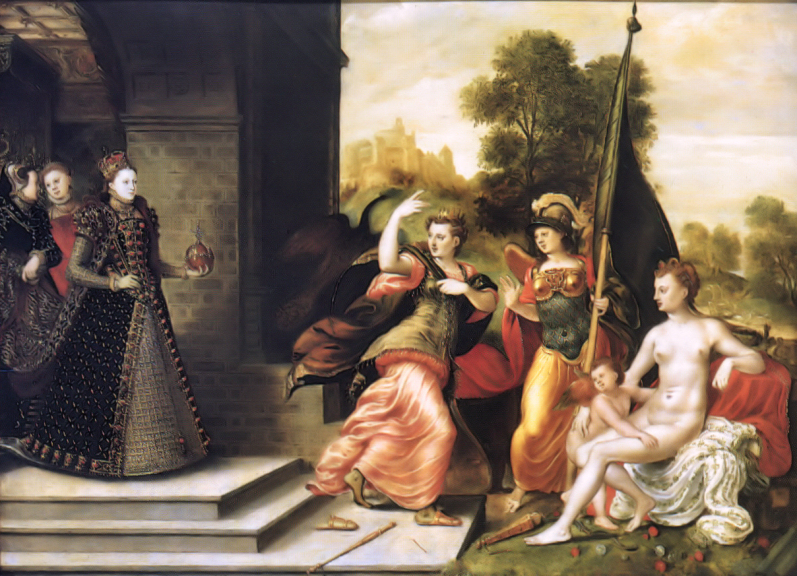
In 1601, Weelkes was invited to contribute to the Triumphs of Oriana, a collection of 25 madrigals, by 23 composers, curated by Morley. Morley instructed all of the invited composers to end their madrigals with the line “Then sang the shepherds and nymphs of Diana: Long live fair Oriana,” which was a tribute to Queen Elizabeth I, as she was likened to the British medieval princess of that name. Weelkes’s contribution, “As Vesta Was From Latmos Hill Descending,” is a remarkable and beautiful piece of musical art and, also, political propaganda. It is one of the greatest English Renaissance madrigals.
The anonymous text tells the story of the followers of the Roman goddess Vesta. When they come across a “maiden queen” (Elizabeth), they abandon Vesta and join Elizabeth’s court. The madrigal ends with a joyful chorus praising Elizabeth. The music is gorgeous and peak Weelkes. It is through-composed, so no section is repeated, which brilliantly adds to the drama of the narrative. The word-painting is spot-on. And the final line is repeated more than 40 times, an incredible tribute to Elizabeth.
My classical music post for today is Thomas Weelkes: “As Vesta Was From Latmos Hill Descending.”


Leave a Reply