

Throughout history, myths and legends have brought ancient mysteries and epic sagas to life. This September, the Daily Classical Music Post will explore how composers from different eras and continents have reimagined these stories through the universal language of music.
Elisabeth Jacquet de la Guerre – EJG 24 – Céphale et Procris: Tragédie en musique.
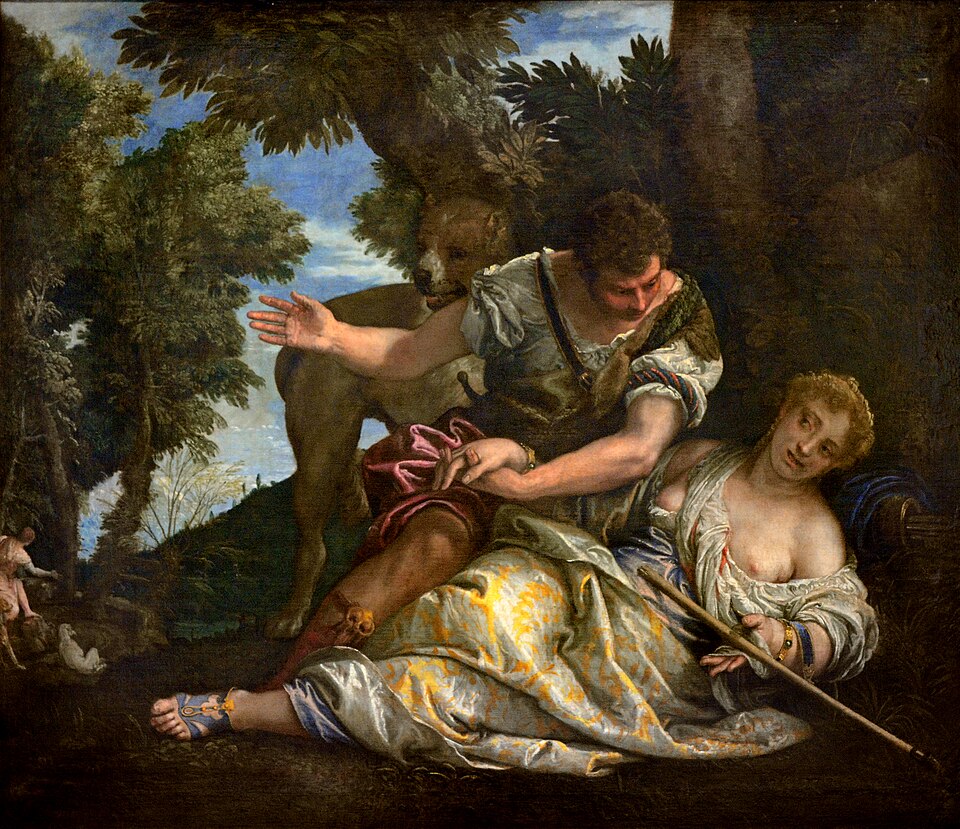
The Roman poet Ovid immortalized over 250 Greco-Roman myths in his masterpiece, the Metamorphoses, in or around 8 CE. The Metamorphoses was well known in the Middle Ages and Renaissance, and this was in fact the main way that people at that time learned about Greek and Roman mythology. One of the myths in the Metamorphoses was that of the tragic lovers Cephalus and Procris. Cephalus, son of the King of Phocis (and not a god, although some alternative stories say he was a son of the god Hermes), was married to Procris, an Athenian princess. Aurora, the goddess of the dawn, wants the handsome Cephalus for herself, so she conjures up a spell to make Cephalus think that Procris has been unfaithful to him. Although husband and wife reconcile, a misunderstanding leads to Cephalus accidentally killing Procris with a magic spear that, ironically, was a gift from Procris to Cephalus. Such a tragic story, and precisely the kind that makes for excellent opera.
The French composer Élisabeth Jacquet de La Guerre (1665–1729) was a child prodigy, born into a family of musicians and instrument makers. Unlike many of her contemporaries, she was encouraged to compose and perform (her main instrument was the harpsichord). She was highly respected as a composer in her lifetime.
In 1694, Jacquet de La Guerre composed the five-act tragédie en musique Céphale et Procris to a libretto by Joseph-François Duché de Vancy. Vancy’s libretto is loosely based on Ovid’s story, but he sets his tale before Cephalus and Procris get married, and he also adds an extra love interest for Procris in the form of Borée, Prince of Thrace. Cephalus kills Procris accidentally with an arrow while he is engaged in a fight with Borée. But the ending is the same: Procris dies and Cephalus is inconsolable. In addition to the five acts, there is an allegorical prologue celebrating King Louis XIV, which was pretty common at that time.
Jacquet de La Guerre’s score shows the influence of Jean-Baptiste Lully, unsurprising as he was the founder of the French genre of tragédie en musique. However, Jacquet de La Guerre did include some innovations, including ending the opera quietly rather than with a final large chorus, as was usual in Lullian operas.
This was not a successful opera. Most of that has to do with the confusing and frankly poor libretto, but it also was likely that as by then King Louis XIV had “gone off” opera, the rest of Paris followed suit. The music is lovely, though, and it is well worth a listen.
My classical music post for today is Élisabeth Jacquet de La Guerre: Céphale et Procris.


Leave a Reply