

Throughout history, myths and legends have brought ancient mysteries and epic sagas to life. This September, the Daily Classical Music Post will explore how composers from different eras and continents have reimagined these stories through the universal language of music.
Baldurs draumar (Baldur’s Dreams), II. Act I
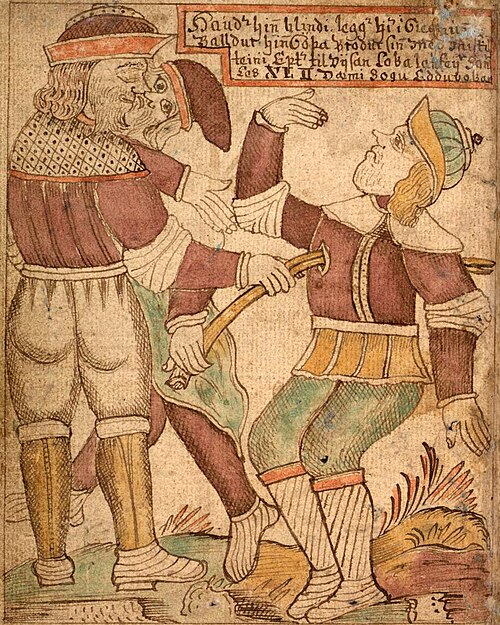
In Norse mythology, Odin was the god of war, wisdom, poetry, and magic, and he is the supreme leader of all of the gods. The most beloved of his many children was the god of light, joy, purity, and beauty, Baldr. Baldr’s story is one of the most tragic in all of Norse lore. He had prophetic nightmares about his own death, which led to his mother, Frigg, extracting an oath from every living and nonliving thing that they would never harm Baldr. Loki was very jealous that this made Baldr invincible, so he tricked Frigg into revealing that she didn’t ask the mistletoe plant to take the oath. Loki then made a dart out of a mistletoe branch, got Baldr’s blind twin brother Höðr to throw it at Baldr, and it pierced Baldr’s heart, killing him instantly. This was the event that led to the twilight of the gods (Ragnarok).
The Norwegian composer Geirr Tveitt (1908–1981) was a central figure in the Norwegian national culture movement during the 1930s. He was affiliated with the Neo-Heathenistic movement, which called for the replacement of Christianity in favour of a system based on Norse mythology and the Poetic Edda, in particular the adoration of Odin, Thor, and Baldr. He even renamed the four modal church scales in honour of Norse gods (Dorian = Rir; Phrygian = Sum; Lydian = Fum; Mixolydian = Tyr), believing they originated in Norway, not in southern Europe. Tveitt’s personal convictions have been connected to far-right German thinking in the 1930s, and this proved devastating to his reputation and led to his ostracism by the Norwegian classical music establishment after World War II.
In 1935, Tveitt composed Baldurs draumar (Baldur’s Dreams), which he described as “A symbolic play for dance and orchestra in three acts” (so, basically, a ballet). There are some voice parts—chants in Tveitt’s own invented version of ancient Norwegian—but these voice parts act more as additional instruments.
Act I begins with the gods gathering to discuss the terrifying dreams that Baldr has been experiencing. Odin is troubled by these dreams and he decides to investigate. He and his eight-legged horse Sleipnir descend into the realm of the dead, Niflhel, where they are met by Garmr, the hellhound, at the gates of Hel. A massive percussion section includes custom-made “Stone Age” drums tuned to the pentatonic scale that create a sense of foreboding. Tveitt combines this ancient-sounding music with French Impressionist orchestration, creating an eerie atmosphere that describes Baldr’s dread of his fate perfectly.
My classical music post for today is Geirr Tveitt: Baldurs draumar: Act I.


Leave a Reply