

Throughout history, myths and legends have brought ancient mysteries and epic sagas to life. This September, the Daily Classical Music Post will explore how composers from different eras and continents have reimagined these stories through the universal language of music.
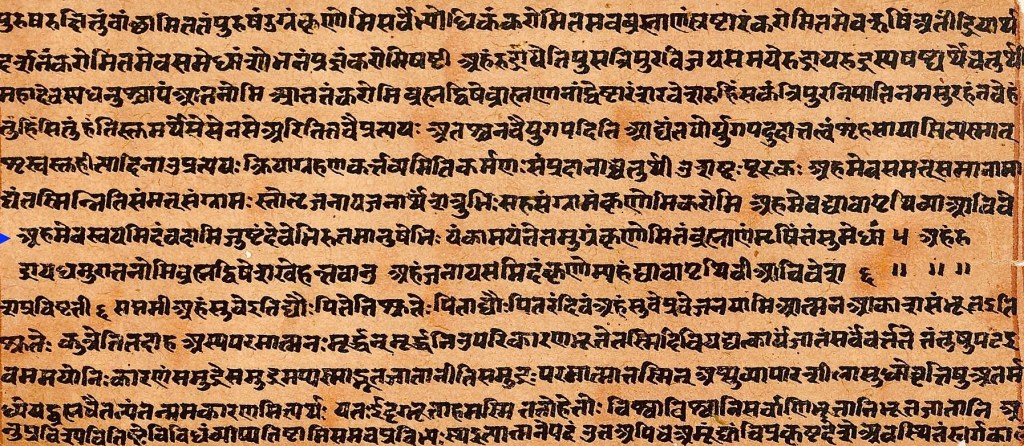
The Rig Veda is the ancient Indian collection of 1,028 Vedic Sanskrit hymns and over 10,500 verses, written between 1500 and 1200 BCE. It is the oldest of the four sacred Vedas and one of the oldest surviving texts in any Indo-European language. One of the most significant figures in the Rig Veda is Ka, which in Sanskrit is the interrogative pronoun for Who. Ka appears in Book 10, Hymn 121, which is known as the Kasmai Devaya Suktam (Hymn to Ka). In this hymn, the poet describes a solitary creator god who generates the cosmos and rules over all breathing things. The question is asked, “To which god should we offer oblations?” As no name was specifically given to this creator deity, some scholars have given the name Ka to a supreme unknown god.
The Ugandan-born composer of Indian descent Shirish Korde (born 1945) often incorporates classical Indian music and subjects into his contemporary classical works. He often combines traditional Western instruments with both classical Indian chants and musical structures as well as using African rhythmic elements that he learned in his childhood.
In 2012, Korde composed the song cycle Ka to a commission by the contemporary ensemble Boston Musica Viva. The five-song piece was written for the Carnatic soprano Deepti Navaratna and features a unique instrumental backing including cello and tabla. The vocal line weaves together traditional alaap (improvised melodic lines) with high-speed konnakol (the South Indian art of vocalizing rhythmic syllables), which mimics the complex live tabla bols (drum strokes).
Sudeep Ararwala wrote, “Korde’s work is supremely complicated to hear, perform, and to understand, yet an immediate pleasure to listen to. Steeped in Vedic and Carnatic word-play, Ka playfully negotiates what is apparently a fine line between common and divine, between classical and folk, between speech and music, and—perhaps most impressively—between Eastern and Western music. The games we hear here may be somewhat obvious but still manage to say something clever and fun: although often (sometimes literally) opposed to each other, Indian instrumentalists and Western chamber musicians create something new and exciting that happily manages to eschew the awkward negotiations that are sometimes necessary for adapting World Music to the concert hall.”
My classical music post for today is Shirish Korde: Ka.


Leave a Reply