

Throughout history, myths and legends have brought ancient mysteries and epic sagas to life. This September, the Daily Classical Music Post will explore how composers from different eras and continents have reimagined these stories through the universal language of music.
Mallorca, Op. 44: I. Las cuevas del Dragon
The mythological creatures called dragons exist in virtually every culture. Chinese and Japanese traditions revere dragons as benevolent, wingless symbols of wisdom, good fortune, and water. Western and Middle Eastern mythologies typically portray them as fire-breathing, greedy monsters of chaos. And Mesoamerican cultures venerated dragons as powerful creator deities, for example, the feathered serpent Quetzalcoatl.
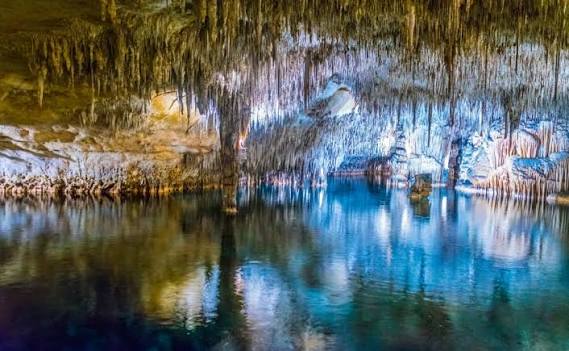
Dragons were a particularly important part of medieval mythology on the Spanish island of Mallorca. These dragons were snake-like with wings, and they were said to use their evil powers to guard treasures (a role attributed to dragons in Greek mythology as well) hidden in caves around the island. The people who lived on the islands also blamed the sounds of crashing waves against the stones on the dragons. The famous Caves of Drach were named for these creatures, as was the uninhabited islet Sa Dragonera, just off the west coast of Mallorca. The oral stories involving dragons were collected and written down in the local dialect in the late 19th century by Antoni Maria Alcover in L’Aplec de Rondalles Mallorquines d’en Jordi des Racó.
So by the time the Spanish Nationalist composer Joaquín Turina (1882–1949) composed his three-movement piano suite Mallorca, Op. 44 in 1927, the stories of these island dragons were well known throughout Spain. Turina was inspired by a trip he took in the 1920s to the island. The first movement of the piece, “Las cuevas del Dragón,” was his musical response to visiting the Caves of Drach.
“Las cuevas del Dragón” opens with ominous chords evoking the limestone caves where the dragons hide out. Turina called this first section Bloques y rocas (Blocks and rocks). The second section, El palacio encantado (The enchanted palace), is lighter, depicting the subterranean lake in the caves as well as the magical atmosphere in the inner chambers. The final section, Coda, returns to the sounds of the beginning, bringing the dragons back to the forefront. Turina was heavily influenced by the French Impressionists, particularly his teacher Vincent d’Indy. He uses arpeggios to create a sense of the caves, for example, and creates a resonant effect of the sound of water lapping against the rocks. There also are hints of Turina’s more Andalusian works, particularly in his use of Iberian modes and melodic phrasing.
My classical music post for today is Joaquín Turina: Mallorca, Op. 44, I. “Las cuevas del Dragón.”


Leave a Reply