

Throughout history, myths and legends have brought ancient mysteries and epic sagas to life. This September, the Daily Classical Music Post will explore how composers from different eras and continents have reimagined these stories through the universal language of music.
Popol vuh, Op. 44: I. La Noche de los Tiempos
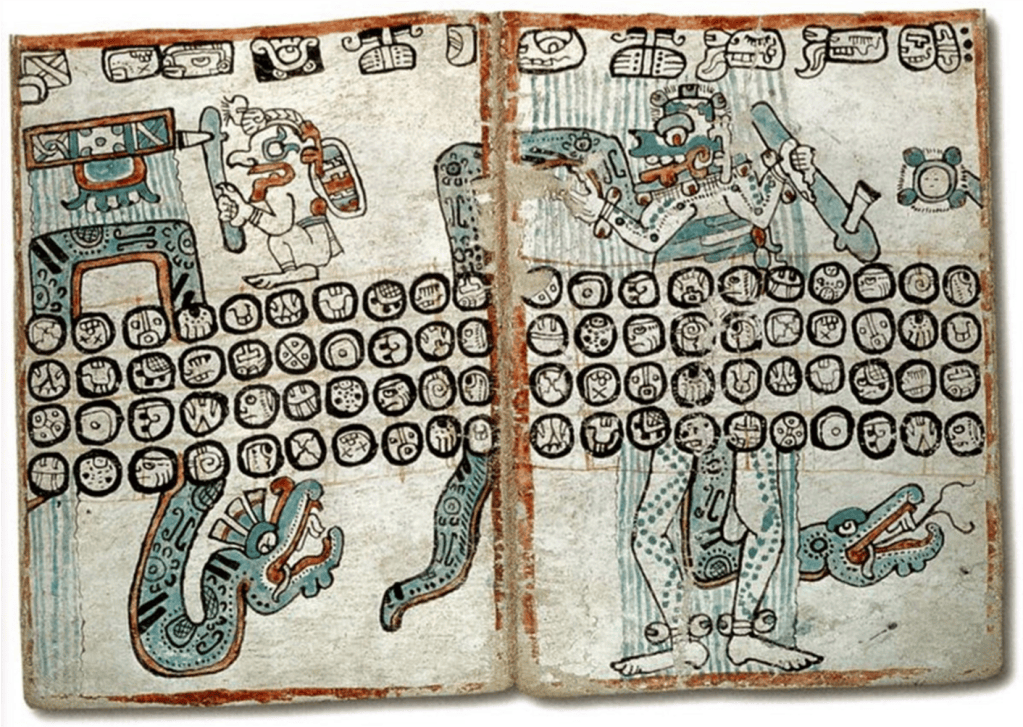
The Popol Vuh, the sacred text of the Kʼicheʼ Maya, is a record of the ancient Mayan creation story, an epic narrative that blends divine trial-and-error with cosmic balance. In the beginning, the creator gods summoned the Earth out of a silent primordial sea, but their ultimate quest was to create intelligent beings who could worship and count the days. After failed attempts using animals, mud, and wood, the gods finally succeeded by carving the first true humans from white and yellow maize, establishing a sacred bond between the Mayan people and the corn that sustained them.
Some time around 1701, the Spanish Dominican priest Father Francisco Ximénez wrote down the Mayan creation story in Kʼicheʼ, crafting the only surviving copy of the Popol Vuh. Without his work, the Mayan creation story might have been lost forever. His intentions were not entirely altruistic, however; he mainly compiled the text as a tool to help other Catholic priests dismantle the Mayan traditional religion to convert them to Christianity. His translation also subtly mixed Christian biblical phrasing into the original Mayan narrative, so we can’t be sure just how true it is to the original.
The Argentinian composer Alberto Ginestra (1916–1983), one of the most significant 20th-century composers of the Americas, was well known for his skillful blending of European art music and Argentinian folk music. He began work on Popol Vuh: The Creation of the Mayan World, Op. 44 in 1975, but he had only completed seven movements by the time he died. He had planned an eighth movement, most likely for percussion only, although whether this was to be the final or the penultimate movement is a subject of some debate.
The first movement of Popol Vuh fills the listener with a sense of foreboding as well as anticipation. It begins really quietly (you may need to turn up your sound in order to hear it). The notion of an unending night-time (the movement is titled “La noche de los tiempos”) is depicted brilliantly by Ginestra in the orchestration and use of low registers for many of the instruments. There is a brief moment of chaos when the Divine Council creates the world. It is not surprising that Popol Vuh has been described as Ginastera’s Rite of Spring.
My classical music post for today is Alberto Ginestra: Popol Vuh: The Creation of the Mayan World: “La noche de los tiempos.”


Leave a Reply