

Throughout history, myths and legends have brought ancient mysteries and epic sagas to life. This September, the Daily Classical Music Post will explore how composers from different eras and continents have reimagined these stories through the universal language of music.
Wawshishijay (“Our Beginning”)
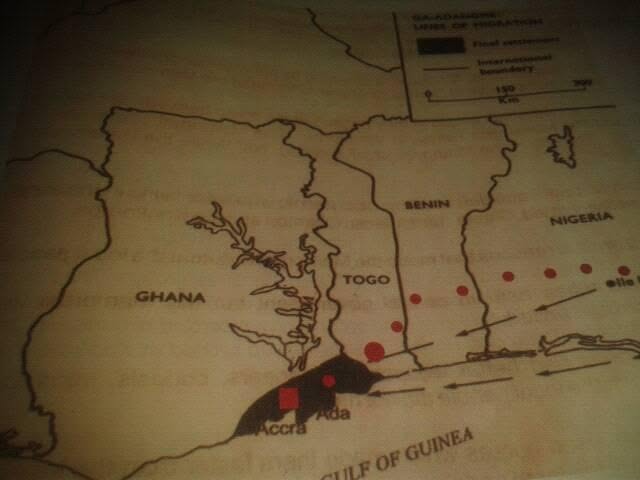
The history of the coastal Ga people of Ghana is inseparable from their relationship with Nai, the supreme deity of the sea. According to oral tradition, this epic migration story began thousands of years ago, tracking a long diaspora from Israel and Egypt, past the banks of the Blue Nile, and through the ancient kingdoms of Nigeria. Led across West Africa by the legendary King Ayi Kushi, the nomadic Ga people endured centuries of wandering and devastating famines before finally claiming the coast of Accra as their permanent home. When they reached the coast, Nai joined forces with Ayi Kushi, merging the royal bloodline with the sea priesthood for all eternity.
The Ghanaian musician, master drummer, dancer, and composer Obo Addy (1936–2012) was commissioned in 1992 by the Kronos Quartet to write a work for their upcoming studio album, Pieces of Africa. Addy believed strongly in using music as a foundational tool for cross-cultural unity, and the piece he composed for the Kronos Quartet, Wawshishijay (meaning “Our Beginning” in the Ga language), fits his philosophy perfectly. He said in an interview, “It’s music we’re giving you from our heart. . . . I think this will be something marking the history of African music and American music, and how they fit together.” Unlike traditional Western classical pieces, Addy didn’t write down the music. Instead, he gave the string quartet a multitrack recording of his ideas for the piece. The violinist Chris Baum transcribed it into Western notation.
Wawshishijay, which includes polyrhythms on various percussion instruments (the donno, brekete, pretia, gidi, and aketse) played by Addy and a sung chorus in the second “verse” as well as the string quartet, brilliantly captures both the physical hardship of Ayi Kushi’s march across Africa and the soul-stirring spirituality of Nai. Although there are some words in the piece, Addy tells his people’s origin history through traditional Ga rhythmic patterns and ritualistic vocal styles. These rhythms are sacred in Ga culture, and they express the history, folklore, and identity of the Ga people that has been passed down through generations.
Alexander Perry wrote in the programme notes to an orchestral performance of Wawshishijay by the Chicago Sinfonietta, “Addy’s music is an incredible fusion of African folk music and Western pop, filtered through the lens of a classical symphony orchestra. Its percussive melodies are exuberant without being naïve; deep without being mournful; and traditional without being stale.” Wawshishijay is an exciting work that brilliantly captures the epic migration and spiritual heritage of the Ghanaian people.
My classical music post for today is Obo Addy: Wawshishijay.


Leave a Reply