

Throughout history, myths and legends have brought ancient mysteries and epic sagas to life. This September, the Daily Classical Music Post will explore how composers from different eras and continents have reimagined these stories through the universal language of music.
‘Hayagriva’ by Param Vir | Birmingham Contemporary Music Group
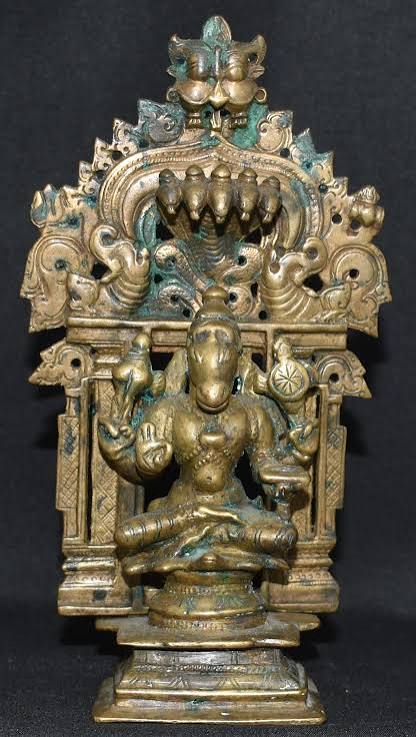
Hayagriva is a horse-headed being known in Indian and Tibetan sacred literature and art as an incarnation of Vishnu, associated with knowledge and wisdom. He usually is depicted with a human body and the head of a majestic white horse, and often is pictured sitting in a peaceful posture, holding a book, a rosary, and weapons of preservation, with one hand raised in a blessing. He is married to another male deity, Gratu, who represents inspiration and the power of intelligence.
The Indian-British composer Param Vir (born 1952) grew up in a household filled with Indian classical music. He studied European composition as a secondary school student, but decided that it would be better for his long-term career to read history and philosophy at university. Many of Vir’s compositions take as their inspiration sacred Indian themes. His 2005 work for large ensemble, Hayagriva, is a fascinating example of how he creates his soundscapes with these ideas in mind.
In the programme notes for Hayagriva, Vir said, “My work draws on this image of Hayagriva and continues an exploration of beings both human and non-human associated with the inner life and self-transformation. . . . After the initial flurry of notes capped by a Tihai (rhythmic cadence appearing three times), the music settles into its first main panel (‘red’), underpinned by 19 cycles of 17 beats each, organised like a chaconne with alternating harmonic fields. . . . The horse panel leads to a bridging section, ‘green-gold’ in focus, associated with compassion. The chief musical elements are a duet for harp and celesta, laced with percussion. This slows down the tempo to the final panel of the work, ‘blue’, which is a single sonic space organised around a structural polyrhythm and a harmonic field based on fourths. The polyrhythmic background is symbolic of the deity Hayagriva’s association in traditional imagery with the eternity of space, and its spiral-like quality is represented by an exact golden section in the main rhythmic division of the panel.”
In a review of the American premiere of Hayagriva, Hedy Weiss said, “Vir, a Delhi-born composer now based in London, has conjured rhythms and colors vaguely reminiscent of Stravinsky’s ‘Rite of Spring.’ His work is a stunner, with the sounds of harp, timpani, chimes, clarinet and strings all superbly rendered here.”
My classical music post for today is Param Vir: Hayagriva.


Leave a Reply