

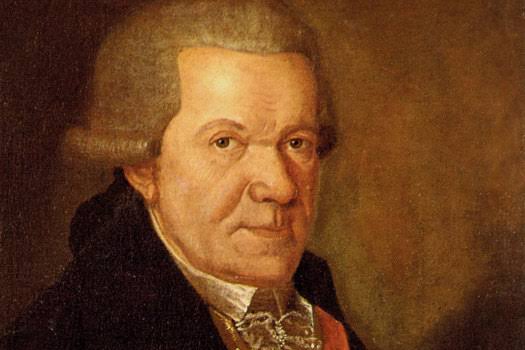
Classical music composition often runs in the family. This July, the Daily Classical Music Post will celebrate some of the well-known and not-so-well-known members of these composing families.
Johann Michael Haydn (1737-1806) – Flute Concerto in D (1766)
Like his older brother Joseph, the Austrian Classical composer Michael Haydn (1737–1806) began his musical life singing in the choir at St Stephen’s Cathedral in Vienna. Michael was also a prolific composer, and Joseph admired Michael’s church compositions; he is said to have thought that Michael’s music was better than his own.
Michael was a close friend of Wolfgang Amadeus Mozart. There are some great stories about their friendship. Mozart composed his duos for violin and viola, K. 423 and K. 424, as a personal favour to help Michael. John Hencken wrote, “The Archbishop of Salzburg . . . ordered Haydn’s brother Michael to compose another set of six [Joseph had composed a set of six earlier]. Michael Haydn was able to complete only four of the required six, however, before illness intervened. Misinformed or unconcerned about Haydn’s situation, the Archbishop threatened to stop the salary of this distinguished musician who had been in his employ for 20 years. . . . When Mozart heard of his colleague’s plight in the summer of 1783, he quickly wrote the two delinquent duos himself and delivered them to the Archbishop under Haydn’s name.” The joke about this is that Mozart had been employed by that same archbishop but had a major falling-out with him. I can just imagine the glee with which Mozart passed off these two pieces as Michael’s own work, fooling his former nemesis. Michael, for his part, preserved the original manuscript of the two works “als ein Heiligthum” (as a sacred relic), and honouring “Mozart’s immortal memory forever.”
For many years, a symphony that Michael composed was wrongly catalogued as being by Mozart. It was removed from Mozart’s list of 41 symphonies, and this is why there is no Symphony No. 37 in Mozart’s catalogue.
Michael’s Flute Concerto in D Major (MH 105), composed in 1766, was the second of two flute concertos that he composed in the 1760s, both in D Major. MH 105 was written for the Salzburg Court Orchestra and its principal flautist, Franz Deibl, who was a close colleague of both Michael and of Leopold Mozart. This concerto is a great example of Michael’s compositional style; at the age of 29, he was well on the way to developing the “Michael Haydn sound”: more adventurous in its wind writing and often more “sentimental” (Empfindsamer Stil) than Joseph’s music of the same period. Wolfgang studied this and Michael’s earlier flute concerto intently, and it is said that when he composed his flute concertos a decade later they were heavily influenced by Michael’s concertos.
My classical music post for today is Michael Haydn: Flute Concerto in D Major, MH 105.


Leave a Reply