

Classical music composition often runs in the family. This July, the Daily Classical Music Post will celebrate some of the well-known and not-so-well-known members of these composing families.
Variation sur un thème de Clément Janequin, JA 118
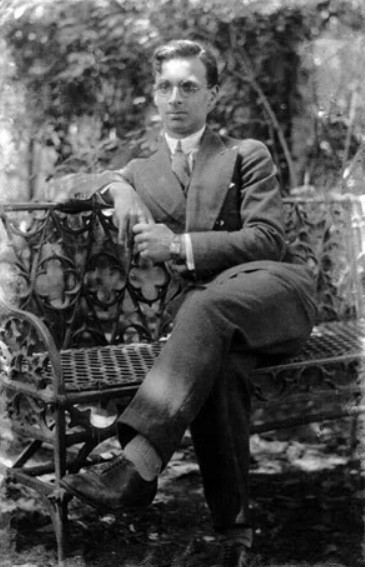
The French eclectic composer Jehan Alain (1911–1940) was also an accomplished organist. He was killed by German soldiers while on a reconnaissance mission during World War II. Many people consider him to be one of the most innovative and interesting composers of the 20th century. He wrote some choral and instrumental music, but his organ music is more well known. He blended late Romanticism, modern dissonance, Gregorian chant, Far Eastern philosophies, and jazz in his works.
In 1937, Alain found some old French songs in a book. The songs were (wrongly) attributed to the 16th-century French composer Clément Janequin. Alain was struck with the juxtaposition of F natural and F sharp in the cadences, and he decided to use the theme as the basis for a set of variations for organ. The result, Variations sur un thème de Clément Janequin, for organ, JA 118, is incredibly beautiful and mystical.
James Reel wrote, “The piece falls into three main parts. In the first, the theme is initially laid out with few alterations from Alain, the simple harmony closely hews to the original and Alain invents only a sketchy countermelody for the left hand. Upon the theme’s repeat, though, the left-hand melody creates a more sour, modern harmony. The second section is a very simple fugato based on the theme’s rising-and-falling first phrase. The final and most extensive section focuses on the rhythm of the theme’s last two bars, which propels the music through several distant keys before allowing the work to settle into a serene and noble conclusion.”
The first time I heard Alain’s organ music was when a friend gave me a CD of Alain’s younger sister, Marie-Claire, playing his complete organ works. I listened to Variations sur un thème de Clément Janequin over and over. I kept thinking, “What would Alain have written if he had not died at the age of 29?”
But at least we do have something to help us to remember this extraordinary talent. We have Marie-Claire to thank for this, as it is really due to her that her brother’s music is as well known as it is today. According to James Higdon, although there was a really big gap in their ages, Jehan took a special interest in his baby sister: “For instance, the Complainte à la mode ancienne (from the Cinq Pièces faciles, AWV 35) is all half notes and whole notes, and it contains the inscription ‘so that Poucette can play the organ at Valloires.’ And we know that ‘Poucette’ was Jehan’s nickname for his little sister. I once asked Marie-Claire, ‘Weren’t you thrilled that your brother wrote a piece for you when you were a little girl?’ And she said, ‘No! I cried because it was too hard for me!’”
My classical music post for today is Jehan Alain: Variations sur un thème de Clément Janequin.


Leave a Reply