

Classical music composition often runs in the family. This July, the Daily Classical Music Post will celebrate some of the well-known and not-so-well-known members of these composing families.
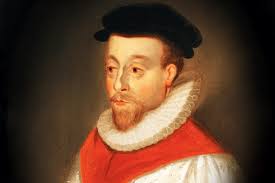
The English Renaissance composer Orlando Gibbons (1583–1625) was perhaps the most distinguished member of the Gibbons family of composers and performing musicians. Orlando is widely revered as the definitive master of the verse anthem, a major English Renaissance choral genre featuring music that alternates between a soloist (the “verse”) and the full choir, typically with organ or viol accompaniment.
Verse anthems were enormously important in early-17th-century Anglican church music. It was vital the words, now in English as opposed to Latin, could be heard clearly and understood by the congregation. By using soloists instead of the full choir for dense lyrics, composers could employ word-painting, distinct vocal declamation, and emotional ornamentation. In addition, choirmasters favoured verse anthems because they reduced rehearsal times; the choir only had to learn the choruses, while the most difficult passages were handled by a few trained soloists. Although verse anthems originally were designed for grand state occasions as well as church services, smaller-scale verse anthems with viol accompaniment were written for private worship in homes or small chapels.
Orlando’s most celebrated Jacobean verse anthem is This is the Record of John. He composed it some time around 1618 to a commission from William Laud, at the time president of St John’s College, Oxford, to celebrate the college’s patron saint. The text, taken from John 1:19–23 in the Geneva Bible, describes the priests and Levites questioning John the Baptist.
William McVicker wrote, “The music—originally set with an accompaniment provided by viols—seems brilliantly matched to the words: the question ‘Who art thou?’; the long notes at ‘and said plainly’; the florid reply ‘I am not the Christ’; the rising figure at the question ‘Art thou Elias?’. There are three sections for the soloist; each is answered in turn by the choir ending with the step-wise phrase sung immediately by all: ‘Make straight the way of the Lord’.”
David Vernier wrote, “Gibbons had an exceptional gift for word-setting in which the text remains clear while the music reigns with churchly majesty and elegance. This is music that immediately could engage any congregation of the period, and yet, at its finest also could artfully challenge the most accomplished singers.”
My classical music post for today is Orlando Gibbons: This is the Record of John.


Leave a Reply