

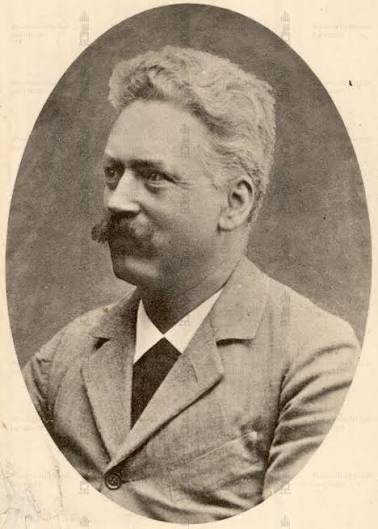
Classical music composition often runs in the family. This July, the Daily Classical Music Post will celebrate some of the well-known and not-so-well-known members of these composing families.
Trio for two violins and piano in A minor, Op. 76: IV. Finale. Sostenuto, più allegro
Fanny and Felix were not the only members of the Mendelssohn family to compose music. The German neo-Romantic composer Arnold Mendelssohn (1855–1933) was also an organist and highly respected music professor. Although Arnold, who was a distant cousin of Fanny and Felix, never achieved global celebrity, he played a massive role in revitalizing German music at the turn of the 20th century. He also taught and influenced many musicians, including Paul Hindemith.
Arnold rejected the overly dramatic, operatic church styles of his peers, choosing instead to revive the pure, interwoven polyphonic styles of Johann Sebastian Bach and Heinrich Schütz. His secular and instrumental music was close in style to Johannes Brahms and Robert Schumann, and he preferred to utilize the traditional structures of Classical music rather than the more programmatic music of Franz Liszt and Richard Wagner.
Arnold composed nearly 300 works in almost every genre: sacred choral works, chamber music, operas, orchestral works, and solo instrumental music. He was popular in his lifetime, but after he died, the Nazi regime in Germany banned his music, mainly because of his Jewish ancestry. His music is only now being rediscovered, performed, and recorded, giving a new generation of classical music lovers a chance to hear these lovely and significant pieces.
Arnold composed the Trio for 2 Violins and Piano in A minor, op. 76 in 1918. This excellent example of the neo-Romantic style is in four movements. The fourth movement, Finale. Sostenuto, più allegro, is the highpoint of the Trio. It opens with a slow neo-Baroque introduction. The declamatory allegro moves forward to the lyrical second melody.
Anonymous reviews have said of the Trio that it is a “tremendous addition to the scanty literature for two violins and piano” and it is “finely constructed and deserving the attention of amateurs and professionals alike.”
My classical music post for today is Arnold Mendelssohn: Trio for Two Violins and Piano in A minor, op. 76: IV. Finale. Sostenuto, più allegro.


Leave a Reply