

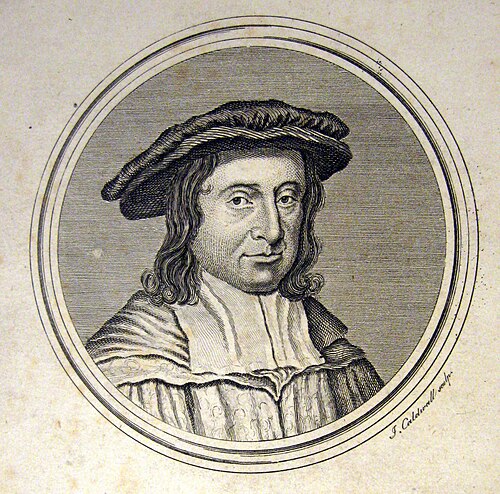
Classical music composition often runs in the family. This July, the Daily Classical Music Post will celebrate some of the well-known and not-so-well-known members of these composing families.
Christopher Gibbons (1615-1676): Not unto us – Fantasy-suite in d – Ah, my Soul
Orlando Gibbons’ father William was a musician, and his brothers Edward and Ellis were composers, but it was his son, the English Baroque composer Christopher Gibbons (1615–1676), who was more important and influential in music history. Christopher was also an organist and teacher, and amongst his students were John Blow and Henry Purcell. His works contributed substantially to the transition from the music of the English Renaissance to the Baroque era.
Christopher was organist at Winchester Cathedral when the English Civil War broke out, and as church music was suppressed by the Puritan-led Parliament, he lost his job. He fought on the side of the Royalists, and during the Interregnum, he moved to London. He collaborated with Matthew Locke on the masque Cupid and Death in 1653, and this is one of the few works of the period to have survived intact. He made a living as a music teacher and also composed incidental music for the theatre.
When Charles II regained the throne, Christopher was appointed to the Chapel Royal, in part as a thank-you from the king for remaining loyal during the difficult years for musicians. He was mentioned several times in the diaries of Samuel Pepys. Much of his music apparently is lost, although in recent years some compositions have come to light. One of these recently discovered works is “Not unto us, O Lord,” a remarkable eight-part sacred anthem dating from around 1665 that showcases Christopher’s daring harmonic language and pivotal role in transitioning English church music into the early Baroque era. Scored for voices accompanied by organ basso continuo, this anthem demonstrates how Christopher was the bridge between the Renaissance polyphonic style of his father and the accompanied declamatory style that Purcell later perfected.
“Not unto us, O Lord” was part of his multipart piece The Oxford Act, which he composed for the ceremonies celebrating the doctorate that he was awarded by Oxford University. The king had personally nominated Christopher for the doctorate, in recognition of his contributions to the musical life of England.
Julian Forbes wrote, “Gibbons junior was a highly talented composer of some genius whose horizons were in no way shortened by his country’s self-involved predicament. Take the opening of ‘Not unto us, O Lord.’ The eight-part texture (itself a statement of confidence and ambition) grows gradually from the second bass upwards, each part rubbing up discordantly against the next and the entries following each other at ever-shorter intervals—you’d say he’d taken the technique from Antonio Lotti, except Lotti wasn’t born until 1667.”
My classical music post for today is Christopher Gibbons: “Not unto us, O Lord.”


Leave a Reply