

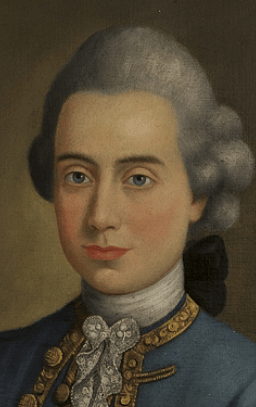
Classical music composition often runs in the family. This July, the Daily Classical Music Post will celebrate some of the well-known and not-so-well-known members of these composing families.
Antonio Puccini (1747-1832) – Miserere a quattro concertato (1771)
The Puccini family was a prominent Italian musical dynasty that spanned five generations. They held a virtual monopoly on Lucca’s liturgical music, serving as maestri di cappella at the Cattedrale di San Martino. Several of the Puccinis were composers as well as music directors.
The Italian late Baroque/early Classical composer Antonio Puccini (1747–1832) was the great-grandfather of the most famous member of the Puccini musical dynasty, the opera composer Giacomo Puccini. Antonio followed his father—Giacomo, also a composer—in moving the style of music in Lucca from a heavy and old-fashioned Baroque style to the lighter early Classical galant style. While his father wrote for standard church choirs, Antonio concentrated on monumental pieces. He added double choruses, multiple soloists, and heavy, military-style orchestration, giving his music a more theatrical presence.
Antonio’s Miserere a quattro concertato (1771) is a pivotal piece that highlights his technical mastery and also is an important bridge in the Puccini family’s transition from Baroque liturgical music to large-scale Classical works. There are five distinct sections in this almost operatic piece. One of Antonio’s innovations in the Miserere is his use of a concertanto style, with two powerful four-part choirs contrasting with virtuosic lines composed for the soloists. He also employed expressive cantabile vocal writing, dramatic instrumental swells, and a wide palette of emotional colours that seem to treat the sacred text almost like a theatrical script.
And the innovations didn’t stop there. Antonio used a full orchestra for the accompaniment rather than an organ. An orchestra provides dynamic text painting through instrumental colour and has a much wider dynamic range. This change was a foreshadowing of late-Classical-era sacred works, as can be heard in the dramatic masses composed by, among others, Wolfgang Amadeus Mozart, Joseph Haydn, and Luigi Cherubini.
By replacing the organ with an orchestra, Antonio paved the way for liberating sacred music from the rigid restrictions imposed by the church. He showed that religious music could handle emotional turbulence and structural grandeur of the Classical symphonic stage. And, as we will learn tomorrow, his son Domenico took this a step further, in many ways preparing the musical ground for the grand operas of their descendant Giacomo.
My classical music post for today is Antonio Puccini: Miserere a quattro concertato.


Leave a Reply