

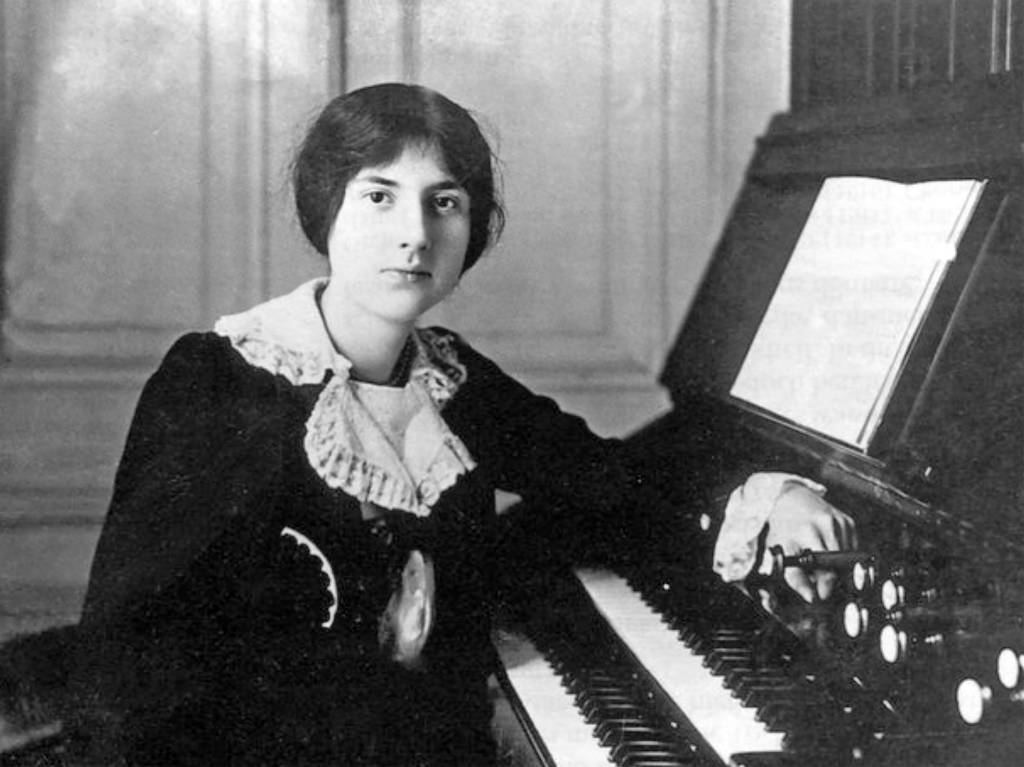
Classical music composition often runs in the family. This July, the Daily Classical Music Post will celebrate some of the well-known and not-so-well-known members of these composing families.
Lili Boulanger: Veille Priére Bouddhique
The French Impressionist composer Lili Boulanger (1893–1918) was Nadia’s younger sister. Lili’s talent was obvious from the age of two, and her parents (both of whom were musicians) took her to all the top people for instruction, including Louis Vierne, Paul Vidal, Georges Caussade, and Gabriel Fauré. When Lili was 19, she won the Prix de Rome for her cantata Faust et Hélène; she was the first woman composer to win.
Lili had been chronically ill almost from birth, and she died from what is now known as Crohn’s disease at the age of 24. Adrian Corleonis says, “Artists who die young leave behind such an aura of promise that one examines their musical remains with divinatory care, for glimpses of what might have been. Lili Boulanger . . . tantalizes in this way. . . . [W]hat strikes one about Lili Boulanger is polish, sophisticated technical omnicompetence going hand-in-hand with a depth and complexity of feeling transcending mere passion. The works she left behind are exquisitely finished.”
Vieille Prière Bouddhique was one of Lili’s last works; she began composing it in 1914 and completed it in 1917. It grips the listener from the start; this extraordinary setting of a Buddhist prayer for the whole universe is at once reverential and hypnotic.
Que toute chose qui respire
—que toutes les créatures et partout,
tous les esprits et tous ceux qui sont nés,
que toutes les femmes, que tous les hommes,
les Aryens, et les non-Aryens,
tous les dieux et tous les humains
et ceux qui sont déchus,
en orient et en Occident, au Nord et au Sud,
que tous les êtres qui existent—
sans ennemis, sans obstacles, surmontant la douleur
et atteignant le bonheur, puisse se mouvoir librement,
chacun dans la voie qui lui est destinée.
Dale McGowan points out that until the early 20th century, most works composed by women were “confined to small forms—solo piano, songs, trios—and endured other restrictions” but “Lili Boulanger had found her way past the hurdles and through the maze. She was writing large-scale works of surpassing strength and originality and receiving the accolades of a composer on the cusp of a brilliant career. Then she was gone.”
My classical music post for today is Lili Boulanger: Vieille Prière Bouddhique.


Leave a Reply