

June is the sixth month in the Gregorian calendar, which is the calendar most in use throughout the world. This June, the Daily Classical Music Post will explore chamber music, choral music, and operatic sextets from the Renaissance to the 21st century.
Missa Preter rerum seriem à 6: II. Gloria
The German Renaissance composer Ludwig Daser (c. 1526–1589) was a pupil of Ludwig Senfl and enjoyed success as a composer and choirmaster for several years in Munich. He was court composer to the duke of Bavaria in the mid-1550s, until Orlando di Lasso arrived in a flurry of massive acclaim, pushing Daser into a subsidiary role. Daser had shown some Protestant sympathies in his music while working at the Catholic court, and in the 1560s the duke suggested that Daser “retire.” In the early 1570s, Daser became kapellmeister at the Stuttgart court, which accepted his beliefs as the duke of Stuttgart was not opposed to Lutheranism. Daser remained in Stuttgart, composing and directing the choir until his death.
Most of Daser’s music was sacred, mainly masses and motets and, once he was working in Stuttgart, chorales. He was highly respected by his contemporaries for the ways in which he treated the plainchant in his masses, often moving the cantus firmus from the tenor part to the highest voice so that the melody could be heard more clearly. Bernhold Schmidt pointed out that although Daser’s style while in Munich was quite conservative, he became more ambitious when he moved to Stuttgart, and his music became more complex and lyrical.
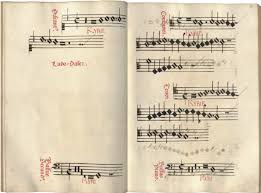
Daser’s six-part Missa Praeter rerum seriem was composed while he was working in Munich, sometime between 1544 and 1555. It is one of just over 20 mass manuscripts that survives. Edward Breen wrote, “Missa Praeter rerum seriem is a parody Mass based on Josquin’s motet, which in turn incorporates the Gregorian chant. It’s a tuneful and intricate setting.” Yes, this is a parody mass, i.e., a mass that uses multiple voices from a preexisting piece of music, but the incorporation of the chant also makes it a cantus firmus mass, i.e., a “fixed melody” mass. Both of these forms were common on their own and combined in Renaissance mass settings.
Todd M. McComb described Missa Praeter rerum seriem as “monumental,” and I would have to agree. It is really sad that Daser was eclipsed by di Lasso and other composers, as his music is definitely worth studying and performing.
My classical music post for today is Ludwig Daser: Missa Praeter rerum seriem: II. Gloria.


Leave a Reply