

June is the sixth month in the Gregorian calendar, which is the calendar most in use throughout the world. This June, the Daily Classical Music Post will explore chamber music, choral music, and operatic sextets from the Renaissance to the 21st century.
Arnold Bax : In Memoriam – 1916, Sextet for cor anglais, harp and string quartet GP190 (1917)
One of the most unjustly neglected composers of the 20th century, in my opinion, is the English composer Arnold Bax (1883–1953). He was a prolific composer, and was popular and well known for much of his lifetime. However, his romantic, impressionistic, and Celtic-inspired compositions fell out of fashion almost as soon as he was appointed Master of the King’s Music in 1942, and his music was quickly overshadowed by musical modernism.
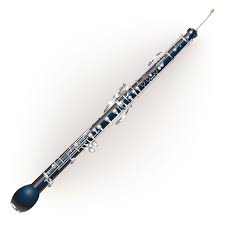
I first discovered Bax when I was an undergraduate, through his choral music, particularly the astonishing eight-part Mater, ora Filium. But I have only recently begun listening to his chamber music. One of these works, In Memoriam (1916), is for one of my favourite instruments, the cor anglais, and harp and string quartet.
Bax travelled to western Ireland in 1902 and, as Maureen Buja wrote, “There he discovered the ‘Celt within’ him and started studying the Irish language, the country’s history and folk-tales and, as he said, he ‘began to write Irishly, using figures and melodies of a definitely Celtic curve’.” He also lived in Ireland for several years before World War I, and it was while he was living there he met many of the leaders of the Irish nationalist movement, including Pádraig Pearse.
Bax was living in England when he heard the news about the 1916 Easter Rising and the execution of Pearse. He was shocked and almost immediately began composing In Memoriam to honour Pearse and the fallen of the Rising. He subtitled the work “I gcuimhne ar bPádraig mac Piarais” (In Memory of Pádraig Pearse), and completed it in August 1916, four months after the Rising. It is an extremely moving, emotional, and romantic work.
The sextet received its premiere in London with the title An Irish Elegy (this was seen as being less political). Bax arranged the sextet for full orchestra, the score of which was lost for many years, only resurfacing in 1993. He also used the central theme in his 1948 film score for Oliver Twist. Aidan Thomson wrote, “The melody is deeply heartfelt and almost cinematic. . . . But the piece also contains moments of violence and tenderness. In a passage that conjures up an image of the street-fighting during the Rising, Bax quotes the rebel song Who Fears To Speak of ’98. The piece ends intimately, as if Pearse has been assumed into Tír na nÓg, the mythical land of everlasting youth.”
My classical music post for today is Arnold Bax: In Memoriam.


Leave a Reply