

June is the sixth month in the Gregorian calendar, which is the calendar most in use throughout the world. This June, the Daily Classical Music Post will explore chamber music, choral music, and operatic sextets from the Renaissance to the 21st century.
Sextet for Oboe, Trumpet & Piano Quartet: III. Andante. Tranquillo e semplice
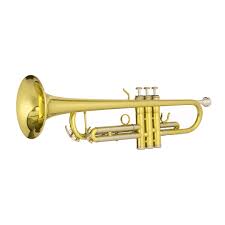
The Welsh composer Grace Williams (1907–1977) once said that her favourite instrument was the trumpet, so it is perhaps unsurprising that wrote her Sextet (1931) for oboe, trumpet, string trio, and piano, a combination that was fairly common in the Baroque era but unusual in 19th- and 20th-century chamber music. In 1933, she entered the Sextet in a chamber music competition sponsored by the Daily Telegraph, but she didn’t win or even place. Leah Broad wrote, “The other prize-winning composers were Cecil Armstrong Gibbs and Edric Cundell. . . . Yet neither composer is particularly heard of now, showing just how complex and capricious the process of historical record formation can be.”
Williams wrote in a letter to her friend, the composer Elizabeth Maconchy (who won third place in the competition for her Oboe Quintet), “I am just a bit jealous of the other sextet. My heart missed a beat when I read about it. – Piano & wind – & then a full stop. But no strings (& I had 3) mentioned – and the description did so fit most of my thing it was nothing but a string of tunes which I wrote mostly when I was sunbathing – nevertheless lots of my first & last mvts. were a bit fiery – so – I have a nasty little serpent within me when I think of this other person’s sextet – but it will soon be subdued.” I think that the “other sextet” to which she refers may have been composed by Benjamin Britten, who was a close friend from the time that they both studied under Ralph Vaughan Williams at the Royal College of Music in London.
Williams’s Sextet is in four movements: I. Poco adagio – Allegro con brio – Poco adagio; II. Allegro scherzando – Poco lento – Allegro scherzando; III. Andante, tranquillo e semplice; and IV. Allegro molto, quasi una tarantella. The oboe and trumpet are more like soloists in this largely tonal work. The third movement begins with a muted trumpet, leading into a rhapsodic and melodic middle section; Williams felt that this was the best movement of the piece. Unfortunately, later in her life, Williams wrote “not worth performing” on several of her chamber music manuscripts, and this is probably why the Sextet was not performed until 2010.
Williams was for the most part neglected for nearly 40 years after her death, but her music is now being rediscovered and recorded, enabling more people to hear the unique and beautiful works of the composer described by Madeleine Mitchell as “Wales’ foremost female composer.”
My classical music post for today is Grace Williams: Sextet.


Leave a Reply