

June is the sixth month in the Gregorian calendar, which is the calendar most in use throughout the world. This June, the Daily Classical Music Post will explore chamber music, choral music, and operatic sextets from the Renaissance to the 21st century.
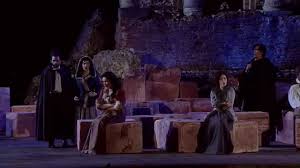
Carmen │ Écoute, compagnon, écoute │ ACT III │ MULTISUB
The French Romantic composer Georges Bizet (1838–1875) did not live long enough to see how popular his four-act opéra comique Carmen (1875) would become. The first audiences to see this tale of unbridled lust and brutality, with a libretto by Henri Meilhac and Ludovic Halévy based on Prosper Mérimée’s novella, were shocked by the unprecedented realism, the moral ambiguity of the titular character, and the cast of villains, scoundrels, and rogues. The critics were not particularly kind, either. Bizet died suddenly after just 33 performances, and it would be another 10 years before Carmen rightly took its place as one of the most popular and best-loved operas in the repertoire.
The tragic story of the naive soldier Don José who falls in love with Carmen, a free-spirited gypsy, continues to resonate with audiences. José abandons his military career and his childhood sweetheart, Micaëla, for Carmen, but when Carmen leaves him for a glamorous bullfighter, Escamillo, José kills her in a fit of jealousy. The music throughout is brilliant and unforgettable, and several of the arias and other pieces are known even to those who have never seen the opera: the Habanera (L’amour est un oiseau rebelle), the Seguidilla (Près des remparts de Séville) and, of course, the “Toreador Song” (Votre toast, je peux vous le rendre).
At the start of Act III, José is hiding out in the mountains with Carmen and her band of smugglers. The group is preparing to sneak contraband past a group of guards. In the sextet “Écoute, écoute, compagnon!” (Listen, listen, companion!), the smuggler chorus sets the scene. Paul Dorgan wrote, “Act 3 begins with two blasts of a horn call, which may be a signal that all is clear. We are in a wild, rocky, deserted mountain place. The original libretto says that one Gypsy appears, then another, then lots of them; the men carry huge bundles on their shoulders. A solo Flute, accompanied by plucked violas and cellos, announces a theme which will be taken over by the violins, and then, varied, by the entire wind section, which expands to include the full orchestra and then quiets down to allow the chorus to be heard. Perhaps the various instrumental entrances of the musical theme are Bizet’s way of observing the stage direction. ‘Be careful,’ they warn each other, ‘a fortune waits down there, but watch your step: the path is dangerous.’ Glorious Bizet! The six principals now sing, accompanied by the winds, a song of joy to their trade: it’s a good business, but it requires courage, for danger is everywhere; but we’re not afraid of the soldiers who are waiting down there to stop us. Repeat of the opening chorus.”
My classical music post for today is Georges Bizet: Carmen: “Écoute, écoute, compagnon!”


Leave a Reply