

June is the sixth month in the Gregorian calendar, which is the calendar most in use throughout the world. This June, the Daily Classical Music Post will explore chamber music, choral music, and operatic sextets from the Renaissance to the 21st century.
Louise Farrenc – Sextet in C Minor for Winds and Piano, Op. 40 (1852) [Score-Video]
The French Classical/Romantic composer Louise Farrenc (1804–1875) was renowned throughout France and Europe as a virtuosic pianist and composer in her lifetime, but until recently her music has been mostly forgotten and ignored. Paul Corfield Godfrey said that Farrenc’s music displays “a measure of originality and invention that makes it easy to understand how the music of Farrenc won the approval of such a critic as [Hector] Berlioz.” Farrenc beautifully blended Classical clarity and balance with the expressive and emotional style of the early Romantic era.
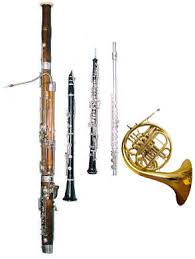
A great example of the masterful way in which she did this can be heard in her four-movement Sextet in C Minor, Op. 40, composed in 1852. This amazing piece is the first in chamber music history to be written for woodwind quintet (flute, oboe, clarinet, horn, and bassoon) and piano. Although the influence of Ludwig van Beethoven, Robert Schumann, and Felix Mendelssohn can be heard throughout, this work is all Farrenc.
From the opening notes of the dramatic first movement, the harmonies and emotional themes draw in listeners. The second movement is expressive and lyrical, and the orchestration allows each of the six instruments to have a moment to shine. Everyone interacts playfully in the minuet, the third movement, contrasting with the more tempestuous outer movements. The virtuosic final movement shows Farrenc’s brilliance and mastery of counterpoint.
Ralph Graves wrote, “In general, Farrenc’s style reminds me somewhat of Mendelssohn’s—with a difference. Farrenc’s music seems a little sturdier and more substantial. Farrenc was an exceptional pianist. Her writing for the instrument in chamber settings is both imaginative and idiomatic. The piano passages aren’t especially showy—Farrenc’s instrument is a team player.”
Jerry Dubins wrote, “What you will notice immediately in Farrenc’s music, however, besides its exquisite craftsmanship and adherence to Classical form, is one of the most innate gifts for melody and harmony of any composer of this period. Melodic pearls pour forth with such grace and in such abundance that the ear hardly has time to absorb one of them before another comes rolling out. And each is encased in an oyster shell of such poignant harmony it hurts the heart to hear it. The invention is nonstop, a flow of musical ideas so fertile that any one of them could serve as the basis for an entire composition.”
My classical music post for today is Louise Farrenc: Sextet in C Minor, Op. 40.


Leave a Reply