

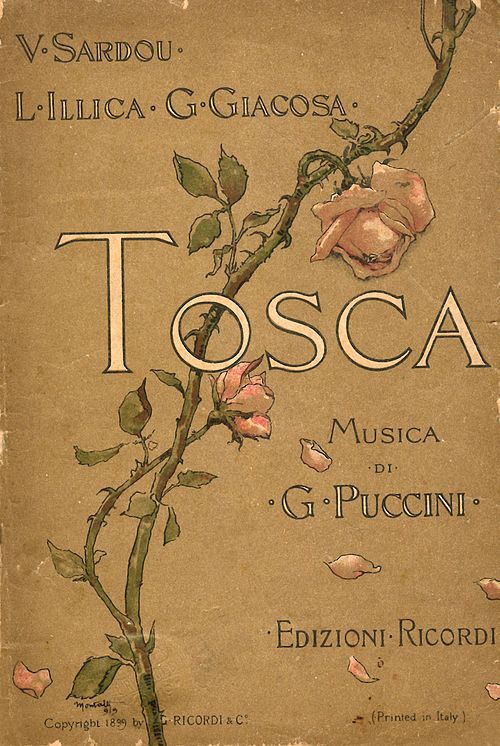
Classical music collaborations range from joint compositions and artistic partnerships to modern crossover projects bridging genres. Some works, particularly in the 18th century, were intentionally created in sections for different composers to work on. This April on the Daily Classical Music Post, we’ll explore some of these partnerships and learn why collaboration is one of the cornerstones of classical music.
Maria Callas sings Puccini: Tosca – ‘Vissi d’Arte’ at Covent Garden 1964
The Italian composer Giacomo Puccini (1858–1924) composed some of the most beautiful and dramatic operas ever written. His first two operas were set to librettos by Ferdinando Fontana. Although Puccini’s music was praised, critics were less kind in their reviews of Fontana’s librettos. And so, when Puccini began work on his third opera, Manon Lescaut, he insisted that he would write the libretto himself. His publisher was not happy about this, however, and after several librettists were hired and then fired, only Luigi Illica (1857–1919) and Giuseppe Giacosa (1847–1906) remained. The success of Manon Lescaut not only solidified Puccini’s place as the successor to Giuseppe Verdi, but it also solidified Illica and Giacosa’s positions as his librettists.
Puccini, Illica, and Giacosa went on to create three of the most iconic and best-loved operas in the repertoire: La Bohème (1896), Tosca (1900), and Madama Butterfly (1904). Their partnership worked incredibly well: Puccini composed the music, Illica designed the scenarios and dramatic structure, and Giacosa turned Illica’s scenarios into poetic verse. The result each time was spell-binding.
Tosca is one of my very favourite operas, and I have seen it performed many times. The tragic story of Floria Tosca, who tries to save her lover, the painter Mario Cavaradossi, from the corrupt chief of police Baron Scarpia, ends in a fatal betrayal, with all three main characters dying, and I always leave the theatre in tears. Illica and Giacosa took four years to turn Victorien Sardou’s 1887 French melodrama La Tosca into a libretto that Puccini felt would work. The three-act opera is set in Rome in 1800, a time of unrest, and (interestingly) premiered in Rome in 1900, also a time of unrest. It was an immediate success with audiences.
Although the American musicologist Joseph Kerman once called Tosca a “shabby little shocker,” most scholars commend the power of the through-composed score, the innovative orchestration, and the tightness of the libretto. The arias, recitatives, choruses, and other elements are seamlessly woven together, and Puccini employed Wagnerian leitmotifs to identify characters, objects, and ideas.
For me, the highlight of Act 2 is Tosca’s aria “Vissi d’arte” (I lived for art). In this extraordinarily heartbreaking aria, Tosca asks why she has suffered so many misfortunes, as she lived for art and love and loved the Lord. She asks why the Lord has abandoned her. Puccini almost left the aria out of the final score because he thought it would slow down the action. Maybe it does, but that’s not a bad thing at all!
My classical music post for today is Giacomo Puccini: Tosca: “Vissi d’arte.”


Leave a Reply