

Classical music collaborations range from joint compositions and artistic partnerships to modern crossover projects bridging genres. Some works, particularly in the 18th century, were intentionally created in sections for different composers to work on. This April on the Daily Classical Music Post, we’ll explore some of these partnerships and learn why collaboration is one of the cornerstones of classical music.
The Met: Live in HD Season 2016-17 Der Rosenkavalier: Wie Du Warst
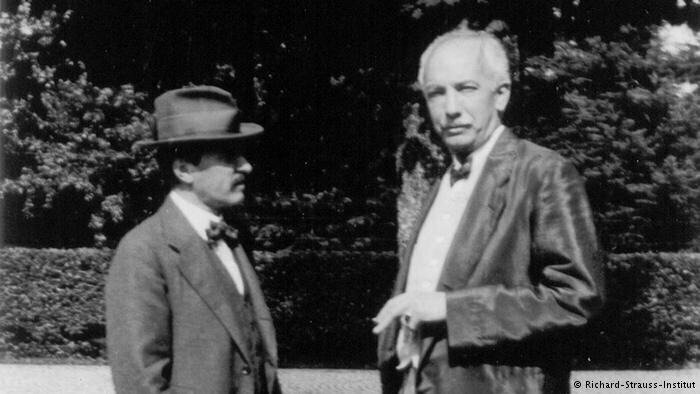
The German composer Richard Strauss (1864–1949) and the Austrian writer Hugo von Hofmannsthal (1874–1929) are proof that opposites attract; Strauss was good-natured and lighthearted while Hofmannsthal was gloomy and extremely stubborn. Somehow, however, they were able to get over their differences and produce six significant operas from 1906 to 1929, combining Strauss’s lush orchestration with Hofmannsthal’s sophisticated librettos. In 1906, Strauss saw Hofmannsthal’s play Elektra and immediately wrote to him, asking that the writer “give me first refusal with anything composable that you write. Your manner has so much in common with mine; we were born for one another and are certain to do fine things together if you remain faithful to me.” Elektra (1909) was their first collaboration, followed by Der Rosenkavalier (1911), Ariadne auf Naxos (1912–1916), Die Frau ohne Schatten (1919), Die Ägyptische Helena (1928), and Arabella (1929).
The most popular of these operas, Der Rosenkavalier, was praised at its premiere for its beautiful music and excellent comedic plot. The story is about the Marschallin, who loses her young lover, Octavian, to the younger Sophie. Octavian falls in love with Sophie when he is sent to present her with a ceremonial silver rose on behalf of the vulgar Baron Ochs, and through some twists and turns Octavian eventually outsmarts Ochs. The opera covers intense themes including infidelity, ageing, sexual predation, and selflessness in love. It is also a showcase for women’s voices: Sophie is a light lyric soprano, Octavian is a mezzo-soprano, and the Marschallin is a dramatic soprano.
Hermione Lai wrote, “‘Wie du warst,’ or roughly translated ‘As you were, my love,’ from Act 1 is a bubbly and heart-melting love fest that’s like a musical macaron; all sweet, colourful, and sooooo delicious. It’s our glamorous leading lady, the Marschallin, lounging in her boudoir and gazing at her young lover Octavian. It’s essentially an aria for Octavian, our smitten teenager. Strauss gives Octavian a lush and ardent melody to gush over his love for the Marschallin, praising her beauty and charm and other things as well. Soaring strings and pulsing orchestration, that’s a musical love letter full of youthful energy. The Marschallin, ever poised and slightly wistful, doesn’t fully join in until later when the voices briefly intertwin in a duet-like exchange. Octavian tells her, ‘I’m so in love!’ with the Marschallin saying something like ‘Oh, sweetie, you are so adorable’.”
My classical music post for today is Richard Strauss: Der Rosenkavalier: “Wie du warst.”


Leave a Reply