

Classical music collaborations range from joint compositions and artistic partnerships to modern crossover projects bridging genres. Some works, particularly in the 18th century, were intentionally created in sections for different composers to work on. This April on the Daily Classical Music Post, we’ll explore some of these partnerships and learn why collaboration is one of the cornerstones of classical music.
Deep Purple – Concerto For Group And Orchestra (Full Album)
A few years ago, I wrote some posts about the progressive rock genre of the 1960s, in which jazz, classical, and folk music were incorporated into the rock format. Some bands—for example, Renaissance; Emerson, Lake, and Palmer; and Procol Harum—based their songs on classical compositions, but these often came across as pastiche, and in any event they were not original compositions.
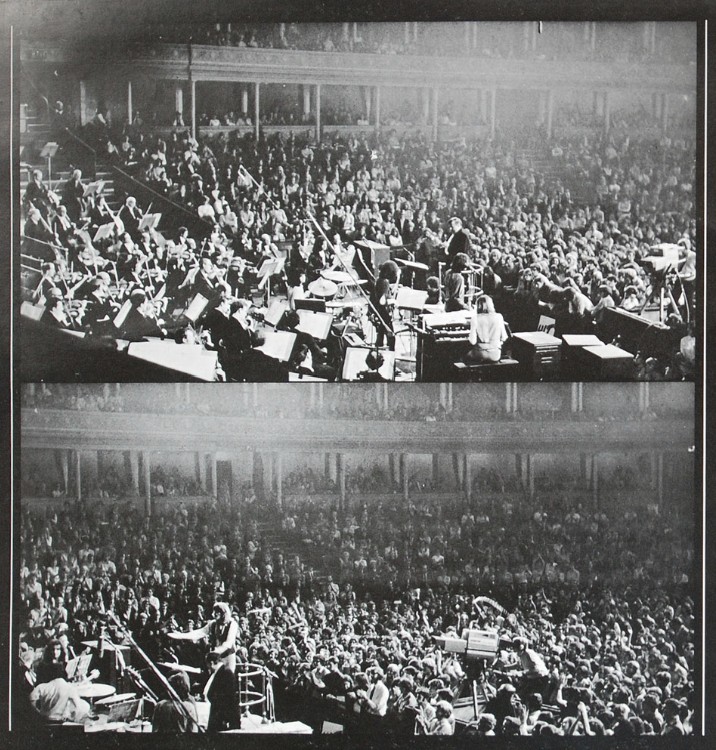
The first totally original fusion of rock band and orchestra was the English composer Jon Lord’s Concerto for Group and Orchestra (1969). Lord (1941–2012) was best known as the co-founder and keyboardist of the British hard rock band Deep Purple. But he also had a strong background in classical music; he studied piano and organ from the age of five, and he often spoke of his love for, in particular, the music of Johann Sebastian Bach and Edward Elgar. His music for Deep Purple was influenced by Bach as well as medieval music.
Lord composed all of the music; Deep Purple’s lead singer Ian Gillan wrote the lyrics. Lord collaborated with the English composer Malcolm Arnold (another influence), who helped with the orchestrations. Arnold conducted the successful premiere at the Royal Albert Hall in 1969, with Deep Purple and the Royal Philharmonic Orchestra. Vincent Budd wrote, “For all those willing to listen with open hearts and empathetic minds to Arnold’s collaborations with Jon Lord, the Concerto for Group and Orchestra of 1969 and Gemini Suite in 1970 (live) and 1971 (studio) still stand as revelatory, quite breathtaking and glorious musical ventures, there to be appreciated by any willing music-lover without the ridiculous encumbrances of critical special pleadings.”
Lord said that he intended the first movement to show the antagonism between the orchestra and the band, but by the third movement some kind of understanding between the two sides is reached, and the Concerto ends with a rhythmic “free for all” and a “whoop” from the band.
Mike Ashman wrote, “Forty-three years down the line, the piece sounds lovable and punchy: Lord puts the two parts of his musical life into one frame—at first as rival opponents of the same musical material and then (after two conciliatory vocal passages in the second movement) coming to work together.” The Concerto for Group and Orchestra has been rightly described as “groundbreaking” and a “masterpiece of integration,” and it is a marvellous example of true genre crossover collaboration.
My classical music post for today is Jon Lord: Concerto for Group and Orchestra.


Leave a Reply