

Classical music collaborations range from joint compositions and artistic partnerships to modern crossover projects bridging genres. Some works, particularly in the 18th century, were intentionally created in sections for different composers to work on. This April on the Daily Classical Music Post, we’ll explore some of these partnerships and learn why collaboration is one of the cornerstones of classical music.
Andreas Scholl: Va tacito (Handel)
Although many of the partnerships we’re looking at this month were harmonious (pun intended), sometimes the participants in the collaboration just about tolerated each other, and occasionally they were antagonistic, actively disliking each other while producing great music.
This was the situation with the German-English Baroque composer George Frideric Handel (1685–1759) and the Italian contralto castrato Francesco Bernardi (1686–1758). For over a decade, Handel created 17 leading roles for Senesino (his stage name, as he was from Sienna). These roles included Bertarido in Rodelinda, Andronico in Tamerlano, and the title roles in Floridante, Orlando, and Giulio Cesare.
Senesino was one of the top castrati of the day. The composer Johann Joachim Quantz said, “He had a powerful, clear, equal and sweet contralto voice, with a perfect intonation and an excellent shake. His manner of singing was masterly and his elocution unrivalled. . . . he sang allegros with great fire, and marked rapid divisions, from the chest, in an articulate and pleasing manner.” His voice was admired, but his personality and attitude were most definitely not; he was described as “arrogant, vain, and touchy.” Interestingly enough, these same words were used to describe Handel’s temperament, so you can easily imagine the clashes that ensued between the two musicians. Handel once called Senesino “a damned fool,” and the two fell out for a few years in the late 1720s. But they reconciled enough to work with each other again in the early 1730s.
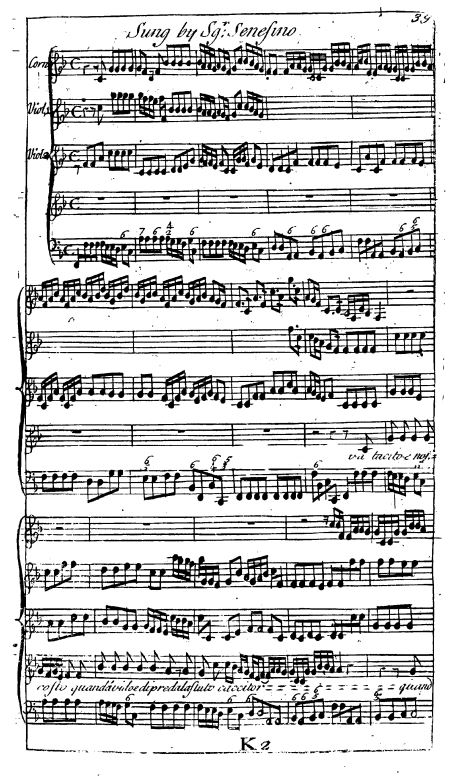
Handel wrote some of his most intense, beautiful, and emotional roles for Senesino. Perhaps the most iconic of these roles was that of the title character in Giulio Cesare in Egitto (sometimes just Giulio Cesare, 1724). Handel set this three-act dramma per musica (opera seria) to a libretto by Nicola Francesco Haym. Giulio Cesare was an immediate success, so much so that Handel frequently revived it in subsequent seasons.
“Va tacito e nascosto” from Act I is a simile aria; that is, the words and music reflect the character’s situation. The piece features an obbligato for natural horn, representing hunting, as Caesar compares himself to a hunter tracking his prey (Tolomeo, king of Egypt). The aria, in ABA form (the first verse of the text is used in the opening and final sections of the aria and the second verse is used in the middle section), is a thrilling moment in the opera.
My classical music post for today is George Frideric Handel: Giulio Cesare: “Va tacito e nascosto.”


Leave a Reply