

Classical music collaborations range from joint compositions and artistic partnerships to modern crossover projects bridging genres. Some works, particularly in the 18th century, were intentionally created in sections for different composers to work on. This April on the Daily Classical Music Post, we’ll explore some of these partnerships and learn why collaboration is one of the cornerstones of classical music.
The Marriage of Figaro – ‘Aprite un po’ quegli occhi’ (Mozart; Erwin Schrott; The Royal Opera)
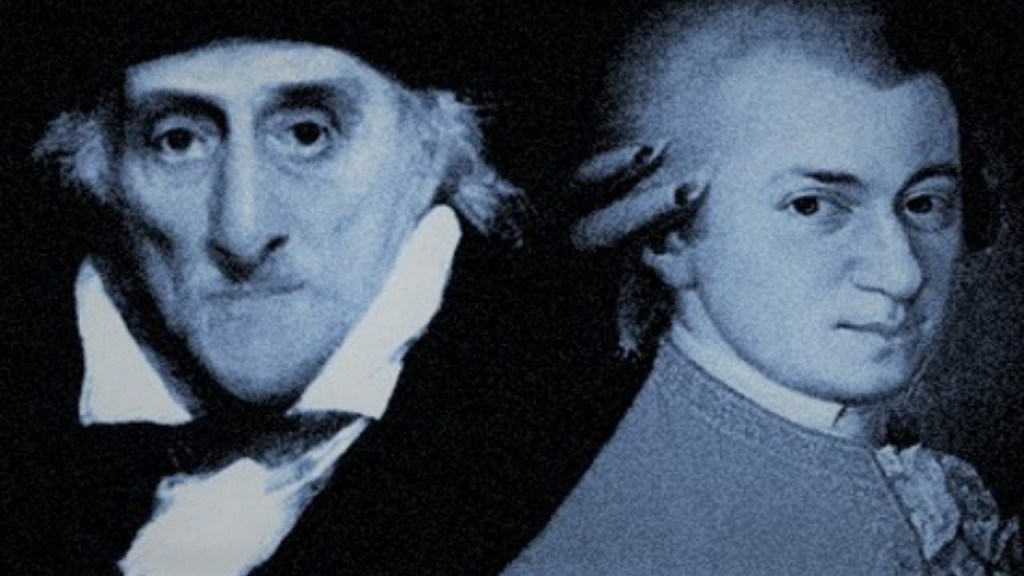
The Austrian composer Wolfgang Amadeus Mozart (1756–1791) was really just getting his name known as a composer in 1783 when he met the Italian writer Lorenzo Da Ponte (1749–1838), official Habsburg court theatre poet and Antonio Salieri’s librettist. Da Ponte was not impressed with the young composer and rebuffed Mozart’s approaches to work together. By 1786, however, Da Ponte relented, and so began what is arguably one of the greatest composer–librettist partnerships in music history. Although Mozart and Da Ponte only produced three operas, all three (Le nozze di Figaro [1786], Don Giovanni [1787], and Così fan tutte [1790]) are brilliant iconic works that are still beloved mainstays of the operatic repertoire. It is extremely likely that had Mozart not died in 1791, they would have continued to work together.
Arguably the best result of the Mozart–Da Ponte collaboration is their first opera, Le nozzi di Figaro. This comic masterpiece blends social commentary and musical brilliance in an infectious way. The opera might never have been written, however, as the source material, the second play of the Figaro trilogy by Pierre Beaumarchais, was banned in Vienna because it denounced aristocratic privilege, giving all the best ideas and lines to the servants. Da Ponte went to Emperor Joseph II to try to convince him to let them go ahead with the opera. The emperor approved it but required all political references to be removed, particularly in Figaro’s final monologue, which in the play was a tirade against aristocratic privilege. Da Ponte replaced this with an aria about the unfaithfulness of Figaro’s bride and the inconstancy of all women. Apparently, that was not a controversial topic in the late 18th century.
In the final act of Le nozze di Figaro, Figaro believes his bride, Susanna, is unfaithful after learning she is meeting Count Almaviva in the garden. He vents his anger in the aria “Aprite un po’ quegli occhi” (Open those eyes a little). Jenna Simeonov wrote, “Figaro’s final aria in Mozart’s Le nozze di Figaro is one that separates the men from the boys. It’s endlessly interesting for dramaturgs, since Figaro breaks the so-called ‘fourth wall’ and addresses the audience directly for the first time in the show. He’s fed up with women and their shenanigans, and it’s one of rare times we really see him lose his cool. Musically, it’s all about stamina.” “Aprite un po’ quegli occhi” is a wonderful moment in which the dark humour as well as emotional vulnerability of the eponymous character is revealed brilliantly.
My classical music post for today is Wolfgang Amadeus Mozart: Le nozze di Figaro: “Aprite un po’ quegli occhi.”


Leave a Reply