

Classical music collaborations range from joint compositions and artistic partnerships to modern crossover projects bridging genres. Some works, particularly in the 18th century, were intentionally created in sections for different composers to work on. This April on the Daily Classical Music Post, we’ll explore some of these partnerships and learn why collaboration is one of the cornerstones of classical music.
Freddie Mercury and Montserrat Caballe – Ensueno – Barcelona – LYRICS (1988) HQ
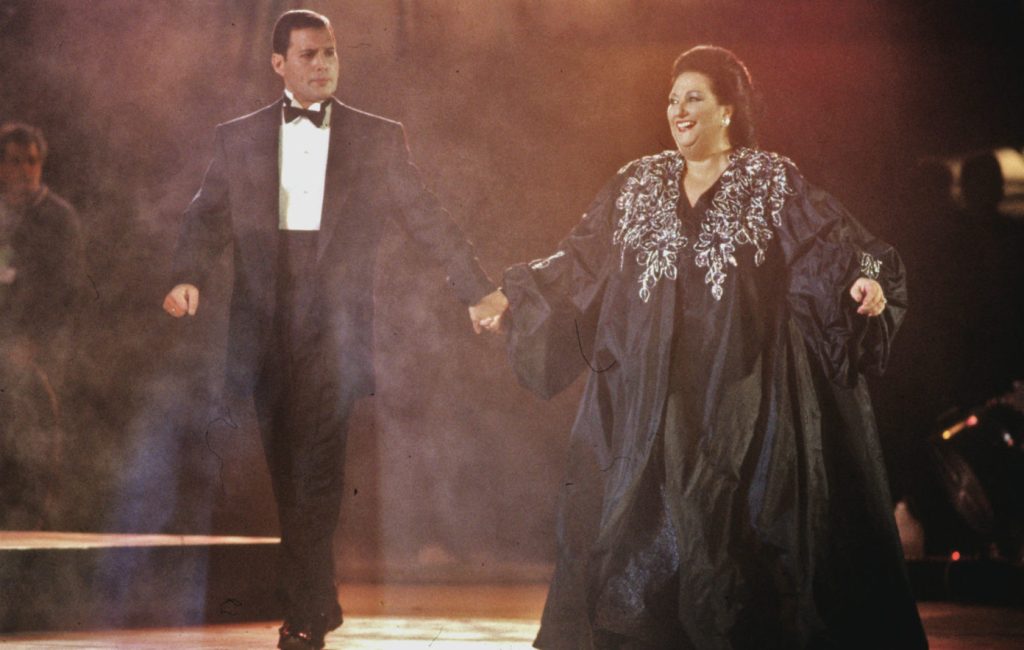
The British composer Freddie Mercury (1946–1991), the lead singer and main songwriter for the 1970s rock group Queen, grew up in India, where he was influenced by Western classical and pop music. Mercury’s compositions combined rock, opera, glam, and pop. He was an enormous fan of classical opera, and his favourite singer was the great Spanish soprano Montserrat Caballé (1933–2018), who he called “Montsy.” In 1987, Mercury’s long-held wish came true, when he met Caballé in Barcelona. She had heard that Mercury was a fan, and she invited him to work with her on the anthem for the 1992 Summer Olympics, which were taking place in Barcelona. Their first collaboration was the massive hit song “Barcelona,” but they quickly turned their admiration for each other’s extraordinary gifts into a full-length album also called Barcelona.
People who were there at the time of their meeting said that they were both extremely nervous: Mercury to meet one of his operatic idols, and Caballé, who thought Mercury was an extraordinary musician and a “rock god.” And they had no idea what this meeting would lead to. Peter Freestone said in an interview, “Freddie assumed they’d only make one song together. Then Montserrat said: ‘How many songs do you put on a rock album?’ When Freddie told her eight or ten, she said: ‘Fine—we will do an album’.”
Mercury often worked with the English composer and producer Mike Moran. Right before the first meeting with Caballé, Mercury and Moran had written a piece that they called “Exercises in Free Love.” Caballé heard potential in the piece and added lyrics, and the piece became “Ensueño.” Freestone said, “Freddie was in awe on ‘Ensueno’, the only song they sang together at the microphone, after Montserrat wrote its lyrics. The only way Freddie’s voice could get quieter was to walk away from the microphone. Montserrat’s control meant her voice just got quieter and quieter. Freddie never had a vocal teacher, he couldn’t do that, but listening to the control in other singers’ voices was how he taught himself.”
This song, and the entire album, is one of the greatest collaborations ever between a rock musician and a classical opera singer. Moran, who was the producer, said to Mercury, “You’re a rock singer, sing rock,” and he said to Caballé, “Don’t try to sing anything other than how you would.” And that worked, brilliantly.
My classical music post for today is Freddie Mercury and Montserrat Caballé: “Ensueño.”


Leave a Reply