

Classical music collaborations range from joint compositions and artistic partnerships to modern crossover projects bridging genres. Some works, particularly in the 18th century, were intentionally created in sections for different composers to work on. This April on the Daily Classical Music Post, we’ll explore some of these partnerships and learn why collaboration is one of the cornerstones of classical music.
Britten: Death in Venice, Op. 88 / Act 2: “Chaos, Chaos and Sickness”
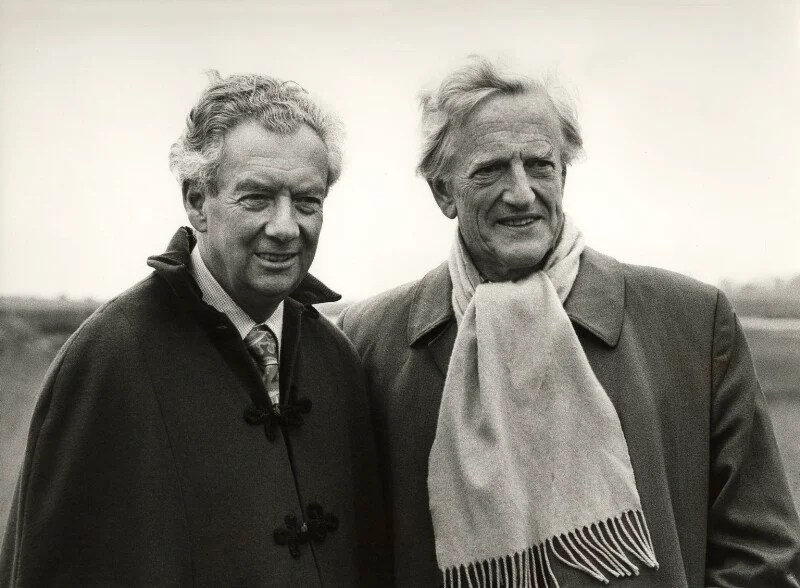
For more than 35 years, the English composer Benjamin Britten (1913–1976) and the English tenor Peter Pears (1910–1986) lived together as life partners, their work together as musicians underpinned by a deep relationship that the two men described as a marriage. Although it was an open secret, for much of their lives that relationship was illegal and a plausible deniability had to be maintained at all times. Britten composed 12 major operatic roles for Pears, beginning with the eponymous Peter Grimes in 1945, and he also wrote song cycles and solo parts in several other works specifically for Pears.
Britten composed the role of Gustav von Aschenbach in his final opera, Death in Venice (1973), for Pears. Britten said of Death in Venice, which he based on Thomas Mann’s novel, “I remember that I wanted passionately to finish this piece before anything happened. For one thing it is probably Peter’s last major operatic part; for another it was an opera I had been thinking about for a very long time.” Unfortunately, he was already in failing health as he worked on the score. Colin Matthews, who helped Britten write out the orchestral parts, said, “There is a very dark side to the work that I still can’t claim to understand.” Myfanwy Piper, who had collaborated with Britten on other operas, wrote the libretto. Pears was very involved in the writing of the text for the recitative sections in particular, and this was a source of some conflict with Piper. But in the end they managed to resolve their differences.
The Act 2 aria “Chaos, Chaos and Sickness” is a pivotal moment in the opera. Aschenbach realizes that the cholera epidemic in Venice is extremely serious, and he also is becoming aware of his obsession with the young boy Tadzio (“Chaos, chaos and sickness. / What if all were dead / and only we two left alive?”). It is a deeply unsettling aria, very dramatic, and reflects Britten’s own thoughts about his failing health and (perhaps) imminent death.
Britten was too ill to attend the premiere, but Pears sang the role several times, and it is considered to be one of both his and Britten’s greatest achievements. Edward Greenfield wrote, “Benjamin Britten, consistently perverse in his choice of opera subjects, has once again proved the impossible. Thomas Mann’s Death in Venice, a compressed and intense story, an artist’s inner monologue, lacking conversation, lacking plot, has against all the odds become a great opera. Britten has turned it into one of the richest and deepest of operatic character-studies.”
My classical music post for today is Benjamin Britten: Death in Venice: “Chaos, Chaos and Sickness.”


Leave a Reply