

Classical music collaborations range from joint compositions and artistic partnerships to modern crossover projects bridging genres. Some works, particularly in the 18th century, were intentionally created in sections for different composers to work on. This April on the Daily Classical Music Post, we’ll explore some of these partnerships and learn why collaboration is one of the cornerstones of classical music.
Chasing Sheep Is Best Left to Shepherds
The English composer Michael Nyman (born 1944) and the British filmmaker Peter Greenaway (born 1942) were one of the most significant composer–director partnerships during the 1980s and early 1990s. Nyman’s Baroque-influenced minimalism worked perfectly with Greenaway’s films, and the result was a unique synthesis of sound and image. Their 11-film partnership has been credited with defining the sound of European art-house cinema in the 1980s.
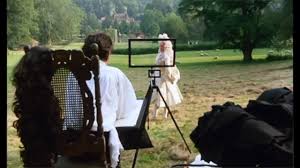
Nyman and Greenaway worked together on six experimental short films beginning in the mid-1970s, but it was The Draughtsman’s Contract (1982), their first full-length collaboration, that brought them to the attention of film audiences. The Draughtsman’s Contract is a murder mystery set in rural England in 1694, near the beginning of the Baroque era in England. Greenaway allowed Nyman to work with a great deal of creative freedom, and the resulting score was more than an accompaniment to the action on screen: it was integral to the narrative structure.
Nyman chose to reflect the period setting by basing his music on Baroque techniques, in particular the ground—a repeating bass pattern on top of which upper voices play variations. The English Baroque composer Henry Purcell was a master at composing over a ground. Nyman used several well-known grounds by Purcell in the film score, but many are unrecognizable because of his minimalist variations added on top. In the 1960s, Nyman had studied the music of the English Renaissance and Baroque with the British musicologist Thurston Dart, and this shows in his brilliant use of Purcell’s motifs.
“Chasing Sheep Is Best Left to Shepherds,” which is heard throughout the film, is a wonderful example of Nyman’s inventiveness. The first and third part of “Chasing Sheep Is Best Left to Shepherds” uses a ground from the Prelude to Act III, Scene 2 of Purcell’s opera King Arthur. In the middle section, Nyman also borrowed a motif from Wolfgang Amadeus Mozart’s opera Don Giovanni. “Chasing Sheep is Best Left to Shepherds” was enormously popular when it was first heard in the film and since then it has been recorded and sampled by dozens of ensembles. It also has been used by numerous television programmes and in several non-Greenaway films over end credits.
My classical music post for today is Michael Nyman: The Draughtsman’s Contract: “Chasing Sheep Is Best Left to Shepherds.”


Leave a Reply