

Classical music collaborations range from joint compositions and artistic partnerships to modern crossover projects bridging genres. Some works, particularly in the 18th century, were intentionally created in sections for different composers to work on. This April on the Daily Classical Music Post, we’ll explore some of these partnerships and learn why collaboration is one of the cornerstones of classical music.
La Gran Vía: “Preludio y Coro: Somos las calles, somos las plazas” (Remastered)
You will notice as we move through April that many of the most famous and most well-known collaborations in classical music revolve around opera and musical theatre, either composer and librettist, composer and director, or, as in today’s case, composer and composer.
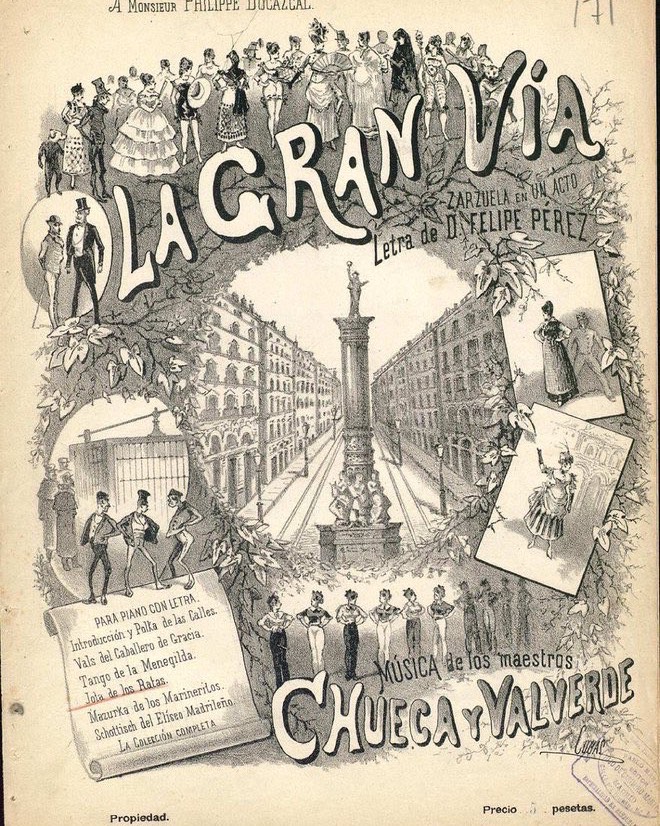
The Spanish composers Federico Chueca (1846–1908) and Joaquín Valverde (1846–1910) were best known for their collaboration on zarzuelas (comic operas) that provided a commentary on life in late-19th-century Madrid. They began collaborating in the mid-1870s. Chueca usually had the musical ideas, and Valverde provided the orchestrations (he was known in his lifetime as “the collaborative musician par excellence”).
La Gran Vía (1886) is perhaps their most famous Spanish zarzuela (comic opera), set to a libretto by Felipe Pérez y González. This brilliant example of género chico (short zarzuela) is about the construction of Madrid’s main avenue and the urban changes and corruption involved. Streets and buildings are personified, and throughout they complain about the construction of this new road. La Gran Vía was a massive success and to this day is one of the most loved works in the Spanish musical theatre repertoire.
The opening of La Gran Vía, “Preludio y Coro: Somos las calles, somos las plazas,” sets the scene, with the streets of Madrid protesting the construction of the new, modern Gran Vía (“Somos las calles, somos las plazas / y callejones de Madrid, / que por un recurso mágico / nos podemos hoy congregar aquí”) and vowing to team up to prevent the construction. I’m sure 19th-century audiences in Madrid would have loved this wonderfully upbeat chorus, stating the concerns about the changes to come to the city in an infectiously fun way.
Christopher Webber wrote, “For many, La Gran Vía is the essential género chico zarzuela. By turns simple and sophisticated, satirical and celebratory, musically direct but subtly organised, its vitality and popularity are undimmed by time. . . . Chueca’s melodic and rhythmic vitality are as potent today as ever they were, and many of the numbers still retain their status as popular hits. As for Valverde, current musicological opinion suggests his contribution was primarily the addition of orchestral polish.”
My classical music post for today is Federico Chueca and Joaquín Valverde: La Gran Vía, “Preludio y Coro: Somos las calles, somos las plazas.”


Leave a Reply