

“Give me your tired, your poor, / Your huddled masses yearning to breathe free.” This poem, which once epitomized the spirit of the United States of America, would appear to no longer be true, with immigrant visa processing for more than 75 countries shut down indefinitely by the current US government. This month, the Daily Classical Music Post will explore and celebrate the traditional and contemporary classical music of 31 of these countries.
Luis A. DELGADILLO. NIC. Tríptico de Danzas Indígenas Dir. Inv. Francisco Jarquín V. TNRD 170425
Nicaraguan music mixes influences from indigenous people, European invaders, and enslaved people. Western European dances like the polka and mazurka as well as African and Caribbean dances accompanied by the marimba de arco, guitar, accordion, and guitarrilla are popular throughout the country. Classical musicians combined these different influences to create Nicaraguan art music.
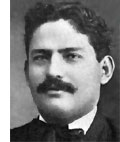
The Nicaraguan composer Luis Abraham Delgadillo (1887–1961) first studied music in Managua, where he was born. He showed so much talent that the Nicaraguan government sent him to study in Milan. He was the founder of both Nicaragua’s National School of Music and the National Symphony Orchestra, and he is (possibly erroneously) credited with writing the Nicaraguan national anthem. He taught theory and composition in Mexico City and in Panama and conducted at Carnegie Hall in New York City. T. M. Scruggs wrote, “Delgadillo was the first Nicaraguan to write large orchestral works and remains the Nicaraguan classical composer with the greatest exposure on the American continent.”
Leonardo Pérez wrote, “Delgadillo was the most prominent composer of art music from Nicaragua; however his music is largely unknown. . . . Central American music is underrepresented in the Classical canon, especially compared to music by the more well-known Hispanic composers of Mexico, South America and Europe. Delgadillo’s works are a worthwhile representation of Central American art music and deserve a place alongside the more established concert repertoire.”
Delgadillo’s Tríptico de Danzas Indígenas (1942) for orchestra is in three parts: 1. “Danza de las flechas”; 2. “Tramonto en la cumbre”; and 3. “Danza del fuego Maya Quiché.” Within the Western European structure, the traditional indigenous music of Nicaragua shines through, in the rhythms and dissonances. All three movements are beautiful, but the second, “Sunset at the Summit,” is my favourite, with its sweeping melodies. As I listen to the orchestra, I can picture the sun setting, the shadows growing, and animals settling down for the night.
My classical music post for today is Luis Abraham Delgadillo: Tríptico de Danzas Indígenas: 2. “Tramonto en la cumbre.”


Leave a Reply