

“Give me your tired, your poor, / Your huddled masses yearning to breathe free.” This poem, which once epitomized the spirit of the United States of America, would appear to no longer be true, with immigrant visa processing for more than 75 countries shut down indefinitely by the current US government. This month, the Daily Classical Music Post will explore and celebrate the traditional and contemporary classical music of 31 of these countries.
Mustafa-Aicha Rahmani NAWBA نوبة Marcelo de la Puebla, guitarra
Traditional Moroccan music is a combination of influences from Berber, Arab, Andalusian, and West African music. The songs and dances of the indigenous Berber people were adopted and adapted by a succession of invaders, particularly from other parts of Africa as well as from France and Spain. Moroccan contemporary classical music developed from these very different origins.
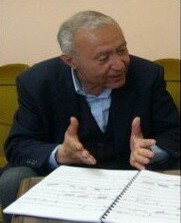
The Moroccan composer Mustafa Aicha Rahmani (1944–2008) wrote approximately 200 works in almost every genre and for almost every Western European instrument. Fewer than ten of these pieces were published, and although his music has been performed around the world, the majority of his output is still unknown. He is considered to be the creator of Arabic lied and is one of the most important Moroccan composers of the 20th century.
José David Guillén Monje wrote, “Mustafa Aicha Rahmani was a composer from Tetouan who developed an eclectic musical repertoire based primarily on the traditional cultural sources of Morocco. Moreover, he uniquely expressed this legacy within a Western musical framework. . . . He is one of the most important composers of the Western tradition comprised of Arab musicians with Europeanizing tendencies in their compositional foundations.”
Souad Anakar wrote, “His beautiful piece titled ‘Nawba’ is one of his works that draws on melodic phrases to convey the sublime meanings of the dialogue between civilizations, the arts, and profound human emotions. It was composed in the form of a suite. The first thing that stands out clearly in it is the dialogue in two modes between two musical styles, one Arabic in its original heritage, and the other Western. But the truth is that despite their differences, the two come together when they rely on consecutive melodic sequences.”
Nawba is in five movements: “Prelude—Boghia,” “Evening at the Home of Master Temsamani,” “Sufi Prayer,” “Walk through Zanqat el-Ayún,” and “Wedding at Bab el Oqla.” This work for guitar is a wonderful example of Rahmani’s ability to combine Moroccan Arab and Andalusian music in an Iberian Post-Impressionism format. It creates a marvellous image of Morocco.
My classical music post for today is Mustafa Aicha Rahmani: Nawba.


Leave a Reply