

“Give me your tired, your poor, / Your huddled masses yearning to breathe free.” This poem, which once epitomized the spirit of the United States of America, would appear to no longer be true, with immigrant visa processing for more than 75 countries shut down indefinitely by the current US government. This month, the Daily Classical Music Post will explore and celebrate the traditional and contemporary classical music of 31 of these countries.
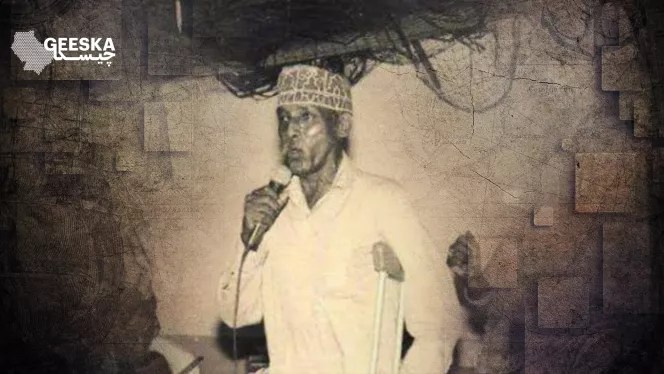
Father of Somali music Abdullahi Qarshe “Dadkaan Dhawaaqayee”
Somali classical music traditionally was just poetry sung unaccompanied, without any instrumental accompaniment. It wasn’t until the middle of the 20th century that musicians began to include the kaban (oud) lute, writing elaborate original tunes. Somali classical music shares some characteristics with Indian classical music.
The Somali musician Abdullahi Qarshe (1924–1994) is known as the “Father of Somali music,” although he preferred to think of himself just as the first Somali to set Somali traditional songs to a kaban accompaniment. Mohamed-Rashid Sheikh Hassan wrote, “Qarshe pioneered the fusion of traditional Somali rhythms with the melodies of the lute, crafting a modern, instrument-backed Somali sound. He was a cultural and artistic innovator. His unwavering passion for the arts, coupled with his ability to draw inspiration from diverse cultural influences, cemented his role as a cornerstone in the evolution of Somali music.”
Abdullahi was influenced by Western cinema as well as Indian and Arabic music, and taught himself to play the kaban with a goal of creating music in the Somali language. He said in an interview, “When Arabs visited Somali cafes, they would ask them, ‘Don’t you have your own music?’ As I said earlier, my taste for music was first inspired by Indian music, and later I realized that broadcasters in the Arabic department were also using some aspects of Indian music and incorporating it into their melodies.”
Qarshe introduced a new and shorter form of Heelloy (melodic poetry and songs). Many of his songs expressed pro-independence and anti-colonial sentiments. His song “Dadkaan Dhawaaqayee” is an example of this: the first few lines of the poem, repeated throughout as a refrain, can be translated as “These people are moving and they want their land. If they resist, give it to them, O God.” In 1957, Qarshe adapted the song to be used as the signature tune for BBC Somali. Qarshe composed the Somali national anthem, “Qolobaa Calankeed,” in 1959.
My classical music post for today is Abdullahi Qarshe: “Dadkaan Dhawaaqayee.”


Leave a Reply