

“Give me your tired, your poor, / Your huddled masses yearning to breathe free.” This poem, which once epitomized the spirit of the United States of America, would appear to no longer be true, with immigrant visa processing for more than 75 countries shut down indefinitely by the current US government. This month, the Daily Classical Music Post will explore and celebrate the traditional and contemporary classical music of 31 of these countries.
Early art music in Guatemala dates from the 1520s, when Spanish missionaries and clergy introduced Flemish and Spanish liturgical music and polyphony to the indigenous population through the rites of the church. By the 17th century, Guatemalan-born musicians were composing both sacred and secular works. The Guatemala City Cathedral houses hundreds of 17th- and 18th-century manuscripts revealing that composers of that time blended European styles with local indigenous xáraca rhythms.
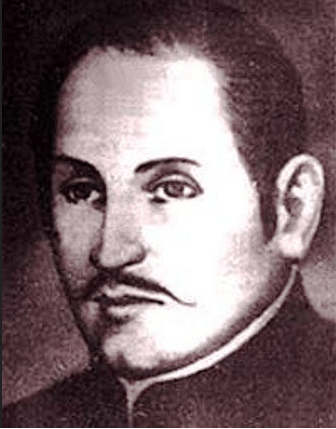
The Guatemalan composer Rafael Antonio Castellanos (c. 1725–1791) trained as an apprentice under his uncle Manuel José de Quirós, chapelmaster of the cathedral of Santiago de Guatemala, whom he succeeded in that post. Castellanos’s style includes beautiful melodies and interesting harmonies, incorporating both Spanish and Italian elements as well as the speech patterns of the indigenous populations. His early compositions show a mastery of Baroque writing and an unusually expressive talent. His extant works, held in the cathedral archives, include 10 sacred works and over 170 secular pieces, mostly villancicos.
Villancicos are traditional Spanish and Latin American Christmas carols, rooted in 15th-century rustic, vernacular songs that evolved into polyphonic religious music. Villancicos have an estribillo (refrain) and coplas (stanzas), and these songs are joyful, focusing on the Nativity, the Virgin Mary, and very occasionally secular themes. They are often performed with instrumental ensembles, although sometimes the manuscripts call for continuo or vihuela (a plucked instrument similar to the lute, very popular in Mexico and Guatemala in the 16th to 18th centuries).
Castellanos’s villancico Pastoras Alegres (Happy Shepherdesses) is a wonderful example of this form of music. Composed in 1778 for tiple [treble] 1 and 2 and alto and instrumental ensemble, this three-part villancico opens with an instrumental introduction, then the estribillo for all voices, a solo copla, and then a copla for all voices. It’s an infectious work, with the music perfectly matching the text. (You can see the text here: https://www.cpdl.org/wiki/index.php/Pastoras_alegres_(Rafael_Antonio_Castellanos).)
My classical music post for today is Rafael Antonio Castellano: Pastoras Alegras.


Leave a Reply