

“Give me your tired, your poor, / Your huddled masses yearning to breathe free.” This poem, which once epitomized the spirit of the United States of America, would appear to no longer be true, with immigrant visa processing for more than 75 countries shut down indefinitely by the current US government. This month, the Daily Classical Music Post will explore and celebrate the traditional and contemporary classical music of 31 of these countries.
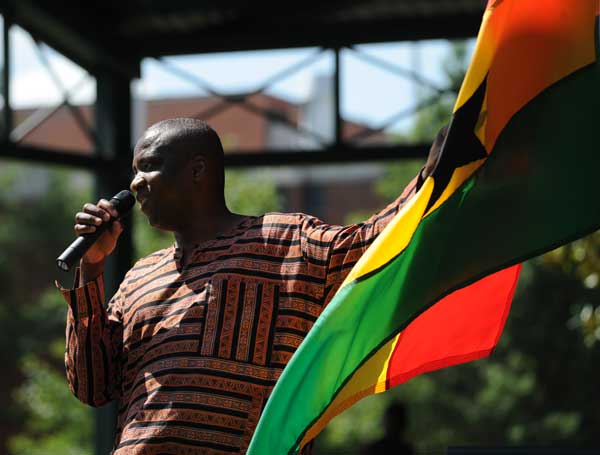
Ghanaian classical music blends Western European classical music structures with indigenous African rhythms and melodies. The National Symphony Orchestra was established in 1959 by Philip Gbeho, who composed Ghana’s national anthem, by order from President Kwame Nkrumah in 1959. The orchestra contains a mix of Western classical and African traditional musical instruments. Mensa Otabil founded the Accra Symphony Orchestra in 2012. The repertoire of the Accra Symphony Orchestra ranges from Western European classical works to African neoclassical music.
The Ghanaian composer George Dor (born 1954) grew up in a musical family. His father, Seth Dor, founded the Alavanyo Unity Orchestra, which performed mainly Western European classical music throughout Ghana in the 1950s and 1960s. He said in an interview, “I’m a musician by blood. I was very young when my dad’s orchestra was playing music. So before I got to going to school, I was learning some of their compositions, and the pieces that they played.” His first Western instrument was the cello, which he played in the National Symphony Orchestra before becoming the musical director. He moved to the United States of America and teaches at the University of Mississippi.
Dor’s orchestral piece Echoes from Nketia and Seth Dor (1994) is one of his most-loved works. The piece features an Ewe rhythm and dance motif called gahu. This is a high-energy dance performed at social occasions, and the drumming pattern is prominent and recognizable throughout the piece. Like all of Dor’s music, this is a wonderful and fascinating fusion of Ghanaian and Western European musical forms.
Kwaku Boakye-Frempong wrote, “It is hard to ignore the uniqueness of George Dor’s work, which sets him apart from his contemporaries. Prof. Daniel Avorgbedor agreed with this when he asked George what distinguished him from other composers. Dor asserted that his Alavanyo background played an important role in his idiosyncratic style of composing. He added that anytime he heard his music being performed, it sounded like his father was speaking to him.”
My classical music post for today is George Dor: Echoes from Nketia and Seth Dor.


Leave a Reply