

“Give me your tired, your poor, / Your huddled masses yearning to breathe free.” This poem, which once epitomized the spirit of the United States of America, would appear to no longer be true, with immigrant visa processing for more than 75 countries shut down indefinitely by the current US government. This month, the Daily Classical Music Post will explore and celebrate the traditional and contemporary classical music of 31 of these countries.
DAISI (Sunset)_Paliashvili. Part 2: Duet of Maro and Nano
Classical music in the country of Georgia has deep roots in the world’s earliest Caucasian and Christian polyphonic traditions. By the 19th century, this traditional polyphony and folk music was combined with Western European classical forms, often creating an unusual and emotional sound. There is a distinctive dissonant “Georgian chord,” which is unique to the traditional three-voiced Georgian polyphony. This chord features a fourth interval with a second on top, and is based on tetra- and pentachords. Music of West Georgia tends to be more rhythmically complex than the music of East Georgia, which is more likely to be accompanied by a drone.
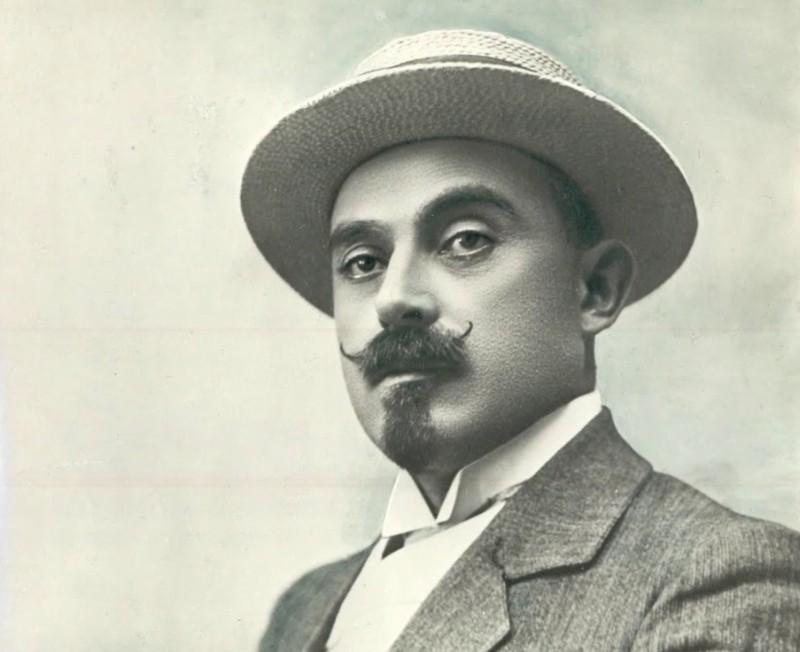
The Georgian composer Zakaria Paliashvili (1871–1933) is known as one of the founders of Georgian classical music. He was known particularly for fusing folk songs and stories with 19th-century Romantic classical music forms. He founded the Georgian Philharmonic Society and was the head of the Tbilisi State Conservatoire. In 1937, the Georgian National Opera and Ballet Theater of Tbilisi was named in his honor. Notably, Themes from his music, particularly his opera Daisi, formed the basis of the Georgian national anthem.
Paliashvili’s three-act opera Daisi (Twilight) was composed from 1921 to 1923 to a libretto in Georgian by Valerian Gunia. The main character, Maro, was named for the Georgian Sister of Mercy Maro Makashvili, who was killed during the Bolshevik annexation of Georgia in 1921. Paliashvili and Gunia wanted to honour her memory, and they did so brilliantly in this opera that combines a tragic love triangle with themes of patriotism and national defense.
Although the music of the opera is musically conservative, the inclusion of Georgian folk melodies and dances throughout adds an emotional element, making it seem less formal. The Georgian chord features prominently throughout the opera as well, making the music easily identifiable as coming from that country. In the chaos following the invasion of Georgia by the Bolsheviks, Daisi encouraged and supported national pride. The premiere was a great success, but the opera was not performed again for 100 years.
My classical music post for today is Zakaria Paliashvili: Daisi: Act I, Maro and Nano’s Duet.


Leave a Reply