

“Give me your tired, your poor, / Your huddled masses yearning to breathe free.” This poem, which once epitomized the spirit of the United States of America, would appear to no longer be true, with immigrant visa processing for more than 75 countries shut down indefinitely by the current US government. This month, the Daily Classical Music Post will explore and celebrate the traditional and contemporary classical music of 31 of these countries.
Shakal and naghma in the melodic mode of emen (yeman)
Classical music in Afghanistan is known as klasik. It is influenced by North Indian Hindustani classical music, Persian literature, and local traditions, and is characterized by the use of ragas and ghazals. Until the 1980s, the majority of musicians in Afghanistan were trained in the Indian classical tradition.
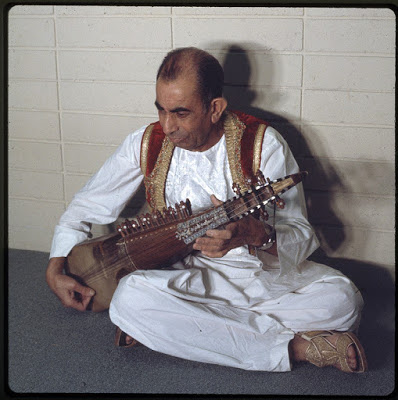
The Afghan composer Ustad [this means master, teacher, or expert] Mohammad Omar (1905–1980) was a virtuosic player of the rabab, a short-necked plucked lute known as the national instrument of Afghanistan. He wrote over a hundred melodies. He formed the National Orchestra of Radio Afghanistan, which was made up of musicians playing regional folk instruments. This orchestra introduced Afghanistan and the world to the wide variety of folk and classical music traditions rooted in ethnic and linguistic groups throughout the country. In 1974, he received a Fulbright-Hays Foreign Scholar Fellowship to teach at the University of Washington. He was the first Afghan musician to teach at a major U.S. American university. He gave a concert in Washington, DC during that year, impressing the U.S. audience with the beauty and intensity of Afghani music.
David Dalle wrote, “Shakal and Naghma in the mode of Emen is a masterpiece. The shakal is the unmetered, unaccompanied and improvised introduction. The beauty of his rabab is shown in exquisite detail as he introduces the mode. The introduction slowly becomes more rhythmic, until he suddenly leaps into the main theme of the piece, now joined by the tabla. The theme is highly rhythmic, and pushes forward with an uncertain momentum through variations. Mohammad Omar adds extensive ornamentation to the variations including a pizzicato in the upper register which works as an almost disturbing and plaintive counterpoint to the theme. The variations build up tremendous speed and tension until a cadence is reached. There is a brief silence before the second major part of the piece begins. The rabab, alone once more, improvises in a darker mode until a new theme, similar to the first, is introduced. Again highly rhythmic, but strained in the darker mode, it is more hesitant in its rhythm, as if it was carrying a painful burden. The pizzicato counterpoint is even more disturbing with this theme. The movement moves haltingly until it begins picking up speed. Suddenly the music accelerates quite quickly, changing to a much brighter mode, breathing an innocent joy into the piece which comes like an awakening. The piece ends in brilliant and happy virtuosity.”
My classical music post for today is Ustad Mohammad Omar: Shakal and naghma in the melodic mode of Emen.


Leave a Reply