

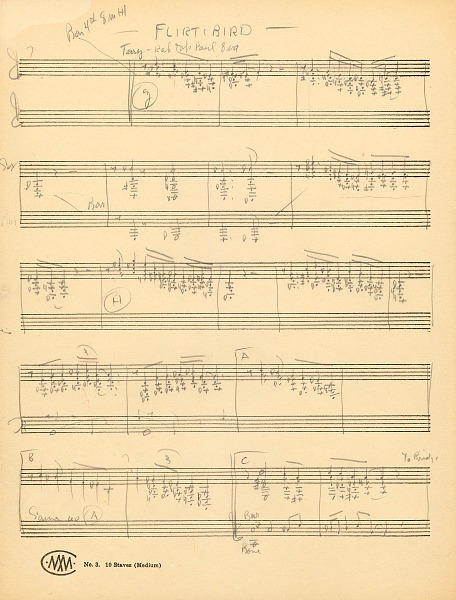
Composers leave works unfinished for many different reasons including untimely death, loss of inspiration, perfectionism, and, in some cases, a feeling that the work is already complete despite being technically incomplete. This February, the Daily Classical Music Post explored unfinished works and found out the ways in which they are performed today, either still incomplete or finished by other composers.
Queenie Pie: My Father’s Island
Duke Ellington (1899–1974) was one of the most influential and important American musicians and composers in the 20th century. He wrote hundreds of compositions, mostly for his own jazz band, but he also wrote works that defied categorization, including suites, film scores, and works for orchestra. Many 20th-century classical composers considered him to be an extremely significant composer. Ellington described his music as “beyond category,” preferring instead to classify it as “American music.”
In the 1930s, Ellington began work on an opera, Queenie Pie, which he said would be an opera-comique. He continued working on it off and on until his death. In the 1980s, John Williams and Leslie Burrs got permission from Mercer Ellington to complete the opera, but although they didn’t finish it, a team of musicians made an attempt. This “completed” version was staged in 1986, but the arrangements have since been lost.
Queenie Pie was written as a tribute to Madame C. J. Walker, who was the daughter of enslaved people. She invented a hair straightener and sold that and other products via mail order and door-to-door; this business innovation made her one of the first female African American millionaires.
Priska Neely wrote, “Duke Ellington started composing what he hoped would be a great American street opera—which composers have spent 40 years adapting, trying to figure out what the Duke wanted for his unfinished opus. But before you imagine soothing arias or boisterous trills and vibrato, let me stop you: Ellington’s opera is very much a work of jazz. . . . The minute that Queenie Pie has her first solo, which is a scat, people are caught off guard—good or bad—but they’re caught off guard.”
Michael Walsh wrote, “Queenie Pie has the authentic sass and soul of Black America. This is what really happened to Bess after she left Catfish Row.” Other reviewers have compared parts of Queenie Pie to the music of Leonard Bernstein and Kurt Weill. But even though there are some similarities—perhaps—to works by those composers, this opera is all Ellington and shows his incredible genius for writing for all instruments and in many different styles.
My classical music post for today is Duke Ellington: Queenie Pie: “My Father’s Island.”


Leave a Reply