

“Give me your tired, your poor, / Your huddled masses yearning to breathe free.” This poem, which once epitomized the spirit of the United States of America, would appear to no longer be true, with immigrant visa processing for more than 75 countries shut down indefinitely by the current US government. This month, the Daily Classical Music Post will explore and celebrate the traditional and contemporary classical music of 31 of these countries.
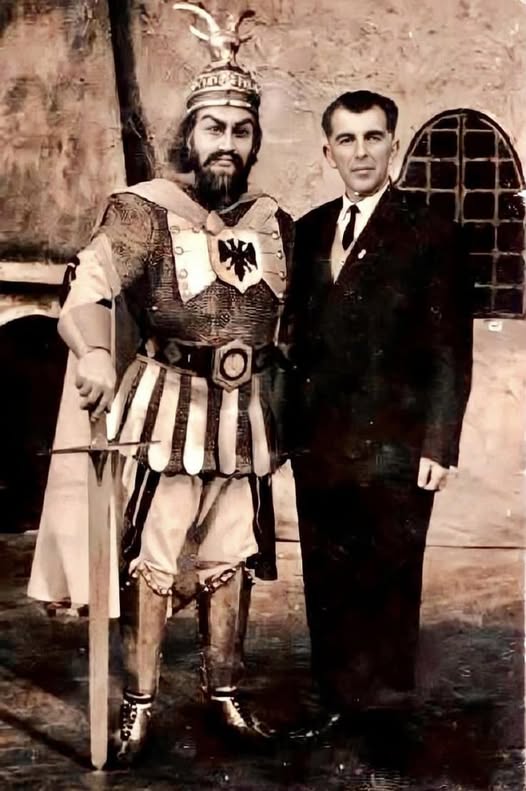
Opera Skenderbeu, musica Prenke Jakova, libretto Llazar Siliqi – atto 1, tablo 1
Classical music in Albania often combines Western European classical traditions with folk music. Traditional music in Albania was polyphonic; it was sung by the Ghegs of northern Albania and the Tosks and Labs in the southern part of the country. A drone accompanied this polyphonic singing. However, it wasn’t until the late 19th century that a professional classical music tradition was established. Çesk Zadeja, known as the “Father of Albanian music,” and the Franciscan priest Padre Martin Gjoka were pivotal in the development of an Albanian classical music style.
The Albanian composer Preng Jakova (1917–1969) composed mostly vocal music and operas. His music was influenced by the 19th-century Italian bel canto style, unsurprising as he studied in Rome. He incorporated elements of Albanian folk music in his lyrical vocal music as well. He is considered to be one of Albania’s most important and greatest composers. His music is beautifully melodic, emotional, and accessible.
In 1968, Jakova composed the historical opera Skënderbeu, based on the life of the Albanian medieval hero Gjergj Kastrioti (known as Skënderbeu). The Communist leader of Albania, Enver Hoxha, had been very impressed with Jakova’s first opera, Mrika (1958) as well as his other works, and in 1968 he asked Jakova to write another opera. Jakova reportedly responded, “Operas are not like loafs which can be put in the oven at any time.” Hoxha would not take no for an answer, however, so Jakova and his librettist, Llazar Siliqi, began work right away.
The Albanian conductor Zhani Ciko said in an interview, “‘Skënderbeu’ has a complicated history. Commissioned by order from ‘above,’ it is said that Enver Hoxha himself met Prenk Jakova personally and gave him the order, and the opera was written in record time. All the heads of state came to attend the premiere, and the reception was very cold. The composer not only received no thanks for the colossal work, but had to face a torrent of criticism, gossip, and, finally, a ‘black’ two-page spread in the newspaper Zëri i Popullit (Voice of the People). This was a fatal blow for the composer . . . who only a short time later, in a severe depressive state, ended his life at the age of 52.” Jakova’s funeral was attended by thousands of people, although none of the Hoxha regime showed up. And it was over 40 years before Skënderbeu was performed again.
My classical music post for today is Prenk Jakova: Skënderbeu: Act I, tableau 1.


Leave a Reply